
Can I Sue If I Was Partially at Fault for a Car Crash in Orland Park, IL?
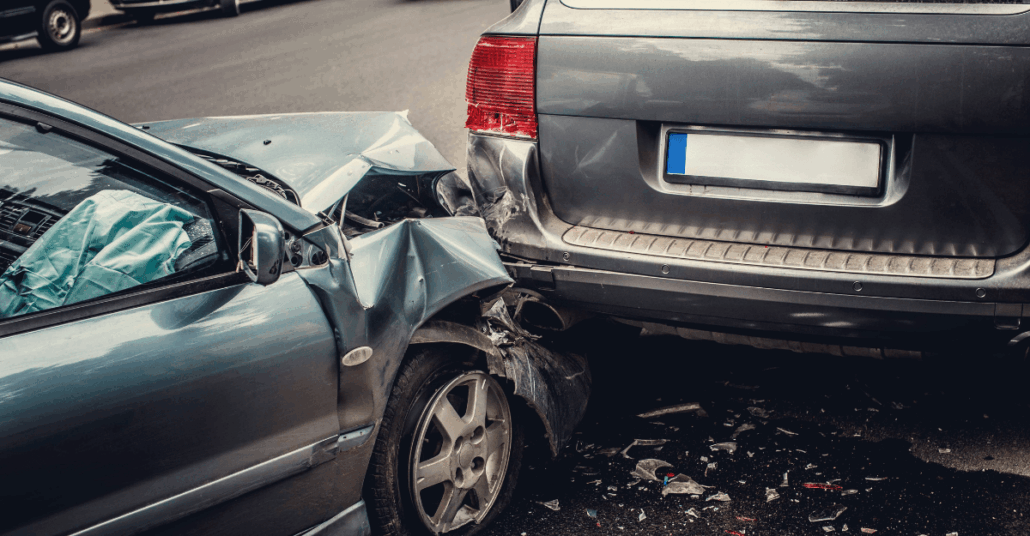
The moments after a car crash in Orland Park, IL are a blur of confusion, adrenaline, and anxiety. One of the most common worries that flashes through a person’s mind is, “What if I was also partly to blame?” Maybe you were driving a few miles over the speed limit when another driver ran a red light. Perhaps you were checking your GPS for a split second when someone slammed on their brakes in front of you.
This is a critical question, and in Illinois, the answer is not a simple “yes” or “no.” It is a “maybe,” and it depends entirely on a legal concept known as “modified comparative negligence.”
Many people in this situation unfortunately, assume they have no rights simply because they were not 100% blameless. They accept what an insurance adjuster tells them, give up their claim, and end up paying thousands of dollars in medical bills and lost wages out of their own pocket. Understanding how Illinois law actually works is the first step in protecting yourself from this costly mistake.
Understanding the “51% Bar Rule” in Illinois
Illinois law is actually quite fair when it comes to shared fault. The state follows a “modified comparative negligence” doctrine, which is formally written into state law under 735 ILCS 5/2-1116.
In plain language, this law sets up a simple, two-part system:
- You CAN recover damages if you are 50% or less at fault. If you are found to be partially responsible for the crash, you are not barred from making a claim. However, your final compensation (your “damages”) will be reduced by your exact percentage of fault.
- You CANNOT recover damages if you are 51% or more at fault. This is the “bar.” If you are found to be the primary cause of the accident—meaning your share of the blame is 51% or more—you are legally barred from recovering any compensation from the other driver.
How Does This Work in a Real-World Scenario?
This is where the math becomes critical. The percentage of fault is not arbitrary; it is a key point of negotiation and argument, determined by evidence like police reports, witness statements, and expert analysis.
- Scenario A: You are 20% at Fault.
You are driving on 159th Street in Orland Park. You have a green light, but you are driving 10 miles over the speed limit. Another driver, trying to beat the yellow light, makes a left turn from 94th Avenue directly into your path. After an investigation, it is determined that while the other driver was the main cause of the crash (80% at fault), your excess speed contributed to the severity of the collision (20% at fault).- Your total damages (medical bills, lost wages, pain and suffering) are calculated to be $100,000.
- The court reduces this amount by your 20% share of fault ($20,000).
- You would be able to recover $80,000.
- Scenario B: You are 60% at Fault.
You are in the Orland Square shopping center parking lot during the busy holiday season. You are looking at your phone to find a store and roll through a stop sign, striking another vehicle that had the right-of-way but was also speeding. A jury determines that your action of running the stop sign while distracted was the primary cause of the crash, making you 60% at fault.- Your total damages are $25,000.
- Because your fault (60%) is over the 50% threshold, you are barred from recovery.
- You would recover $0.
This rule is precisely why you should never admit fault at the scene of an accident. Even a simple “I’m sorry” can be twisted by an insurance adjuster and used as evidence to assign you a higher percentage of blame.
How Is a Percentage of Fault Determined?
The single most important battle in a shared-fault claim is the fight over this percentage. Insurance companies are not on your side. Their adjusters are trained to find any evidence that can shift more of the blame onto you. The more fault they can assign to you, the less money they have to pay.
They will try to use any admission or piece of evidence to build their case. Did you:
- Admit to being in a hurry or running late?
- Say you were tired or not feeling well?
- Mention you were looking at your phone or radio?
- Admit to driving even slightly over the speed limit?
An adjuster will seize on these comments to argue you were distracted, fatigued, or speeding, using them to inflate your percentage of fault.
This is where a thorough investigation becomes essential. To counter these tactics, a strong claim requires objective evidence to establish exactly what happened. This includes:
- The Official Police Report: The responding officer’s report (from the Orland Park Police or Illinois State Police) provides the initial narrative, diagrams, and any citations issued.
- Witness Statements: Independent witnesses who saw the crash at busy intersections, like Harlem Avenue and 151st Street, can provide an unbiased account of who had the right-of-way.
- Video Evidence: Securing footage from nearby businesses’ surveillance cameras or dashboard cameras is one of the most powerful ways to prove what happened.
- Accident Reconstruction: In serious crashes, experts can analyze vehicle damage, skid marks, and “black box” data to scientifically determine speeds, braking times, and points of impact.
Common Scenarios in Orland Park Where Fault Is Shared
While every crash is unique, many accidents in our area involve shared fault. Drivers in Orland Park and the surrounding suburbs navigate a mix of high-speed highways like I-80 and I-57, sprawling shopping centers, and busy multi-lane roads like LaGrange Road that are prone to complex collisions.
Common examples include:
- Left-Turn Accidents: A driver turning left at an intersection almost always has the duty to yield to oncoming traffic. However, if the oncoming driver was speeding significantly or ran a red light, fault can be shared.
- Rear-End Collisions: The rear driver is usually presumed to be at fault. But what if the front driver’s brake lights were out? Or if they cut you off and immediately slammed on their brakes for no reason? In those cases, the lead driver may bear a large portion of the blame.
- Lane-Change Accidents: A driver who merges into another car is typically at fault. But if the other driver was in the merging car’s blind spot and suddenly sped up, or if they were drifting out of their own lane, the blame could be divided.
- Intersection Confusion: At busy, multi-lane intersections like Harlem Avenue and 159th Street, a driver in the correct lane may proceed when the light turns green, only to be hit by a driver in an adjacent lane who was trying to make an improper turn.
The Added Complexity: Cook County vs. Will County
Another complicating factor for Orland Park residents is our location. The village uniquely straddles both Cook and Will Counties. The location of your crash—sometimes by a matter of feet—determines which county courthouse your lawsuit must be filed in.
- A crash on the northern or eastern side of Orland Park (e.g., near Orland Square) will likely be filed in the Cook County court system, often at the Fifth Municipal District courthouse in Bridgeview.
- An accident on the western or southern side (e.g., nearer to I-80) will fall under the jurisdiction of the Will County Courthouse in Joliet.
These are two different legal systems with different local rules, procedures, and tendencies. Navigating this jurisdictional complexity is not something you should ever attempt to do while trying to recover from a serious injury.
Do Not Let an Insurance Adjuster Decide Your Rights
The bottom line is simple: Do not assume you have no claim just because you might have been partially at fault. The “51% bar” is a high threshold, and Illinois law is designed to allow injured people to recover compensation as long as they were not the primary cause of the accident.
Insurance adjusters are skilled negotiators whose job is to minimize their company’s payout. They will use your uncertainty and your own sense of fairness against you, often trying to convince you to accept a tiny settlement or, worse, to drop your claim entirely by implying you were “51% at fault” when the evidence does not support it.
Before you speak to an adjuster, sign any documents, or accept any offers, you should understand your legal rights.
If you have been injured in a car accident in Orland Park or the surrounding communities, you need a clear, honest assessment of your situation. At SFG Law Firm, our attorneys are deeply familiar with Illinois’s comparative negligence laws and have a long history of handling complex cases in both the Cook and Will County court systems. We can help you investigate your crash, gather the evidence needed to protect you from unfair blame, and fight for the full compensation you are entitled to under the law.
Let us handle the legal complexities so you can focus on your recovery. Call us today at 708-942-8400 or fill out our online contact form for a free, no-obligation consultation to discuss the specific details of your case.



Leave a Reply
Want to join the discussion?Feel free to contribute!