
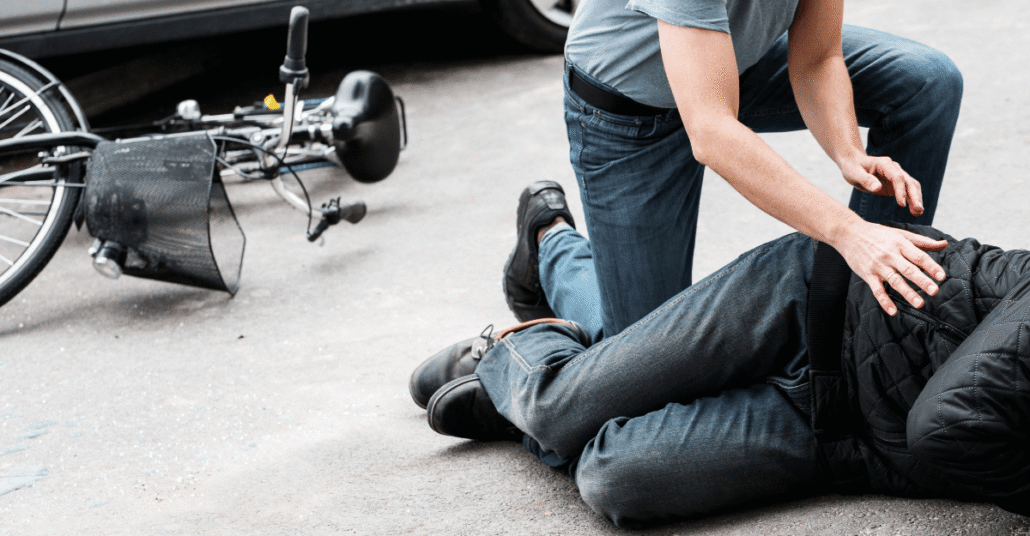
Bicycle Accident on the Illinois Prairie Path: Can I Sue for Trail Injuries?
The Illinois Prairie Path was the first successful rail-to-trail conversion in the United States, and for residents of DuPage, Cook, and Kane counties, it is a treasured recreational resource. On any given weekend, the crushed limestone path is crowded with cyclists commuting between Wheaton and Elmhurst, families walking in Villa Park, and runners training in Warrenville. However, this popularity brings inherent risks. The path intersects with dozens of busy roadways and is subject to the wear and tear of harsh Midwest weather.
When a peaceful ride ends in a collision or a nasty fall due to trail defects, the legal aftermath is far more complex than a standard car accident. Injured cyclists often assume that if a pothole or a negligent driver caused their crash, compensation will follow naturally. The reality is that cases involving the Illinois Prairie Path navigate a complex maze of governmental immunity laws, jurisdictional disputes, and high burdens of proof.
Who Owns and Maintains the Illinois Prairie Path?
One of the first hurdles in any injury claim involving the path is identifying the correct defendant. The Illinois Prairie Path is not a single entity owned by one person. It is a cooperative effort that spans roughly 61 miles and crosses through multiple jurisdictions.
While the land is largely owned by DuPage County (and managed by the DuPage County Division of Transportation regarding the right-of-way), maintenance responsibilities are often delegated to the specific municipalities the path cuts through. For example, if you trip over a hazardous ridge in the path near Grace Street, the liability might rest with the Village of Lombard, DuPage County, or potentially a utility company that recently performed excavation work.
This fragmentation creates a “jurisdictional trap” for the unprepared. Filing a notice of claim against the wrong municipality while the clock runs out on the correct one can be fatal to a case.
- DuPage County: Generally owns the underlying right-of-way for the path. It is often responsible for managing major structural elements such as bridges, culverts, and significant erosion control measures. DuPage County also holds authority over overall corridor planning and long-term improvements.
- Local Municipalities: Cities and villages that the path passes through, including Glen Ellyn, Villa Park, and Warrenville, typically bear the responsibility for day-to-day maintenance. This often includes maintaining the surface quality (e.g., asphalt patching, gravel grading), mowing the grass and trimming vegetation along the edges, and managing trash removal and litter collection within their municipal boundaries.
- Utility Companies: Entities like ComEd (electric) and Nicor (gas) frequently have easements that run parallel to or directly under the path. Their presence means their equipment (e.g., utility poles, buried lines, access points) or construction debris from maintenance or installation work can, at times, create unforeseen hazards for trail users.
- The State of Illinois: When the Illinois Prairie Path intersects with major state routes, such as overpasses or at-grade crossings on roads like Roosevelt Road (Route 38) or North Avenue (Route 64), the Illinois Department of Transportation (IDOT) assumes jurisdiction. IDOT is responsible for the design, maintenance, and safety of those specific crossing points, including signage, signals, and any pedestrian/bicycle infrastructure within the state route’s right-of-way.
Who Is Liable if I Get Hit by a Car While Crossing the Illinois Prairie Path?
If you are struck by a vehicle while crossing an intersection on the Illinois Prairie Path, the primary liability typically rests with the driver for failing to yield, though the municipality may share fault if signage was obscured or the intersection design was inherently dangerous.
While the path itself is a refuge from traffic, the dozens of at-grade crossings are danger zones. When a cyclist leaves the limestone and enters a roadway, they are entering a zone of potential conflict.
Driver Negligence at Crossings
Most injuries on the path occur where the trail intersects with streets. Drivers turning right on red often fail to look for cyclists entering the crosswalk from the trail, or they misjudge the speed of an approaching bike. Under Illinois law, drivers have a duty of care to yield to pedestrians and cyclists in marked crosswalks. If a driver hits you at the bustling intersection of Spring Road in Elmhurst or near the confusing “Y” intersection in Wheaton, their insurance policy is the first place we look for compensation.
Municipal Liability for Dangerous Crossings
Sometimes, the intersection itself is the problem. If a stop sign was knocked down weeks ago and not replaced, or if municipal overgrown brush completely obscured a driver’s view of the trail crossing, the government entity responsible for that road may be liable. However, proving this requires showing they had “notice” of the danger and failed to act.
Contributory Negligence
Defense attorneys will aggressively argue that you, the cyclist, were at fault. They will examine whether you stopped at the stop sign posted on the trail, whether you were wearing headphones, or if you darted out into traffic. In Illinois, if you are found to be more than 50% at fault, you generally cannot recover damages.
Can I Sue the County for Potholes, Washouts, or Tree Roots on the Prairie Path?
Suing a local government for defects on the Illinois Prairie Path is extremely difficult because the Tort Immunity Act usually requires proving “willful and wanton” conduct rather than simple negligence for injuries occurring on property intended for recreational use.
This is the most critical distinction between a crash on the Prairie Path and a crash on a city sidewalk. The Illinois legislature wants to encourage municipalities to provide parks and trails without fear of constant litigation. To do this, they granted broad immunity protections under Section 3-106 of the Tort Immunity Act.
The “Recreational Use” Immunity
Because the Prairie Path is intended for recreational purposes, the government is generally not liable if you are injured by a condition of the property. If you hit a washout caused by heavy rain near the West Branch DuPage River and break your collarbone, the county will likely claim immunity. Simple negligence—like failing to fill a pothole in a timely manner—is often not enough to win a lawsuit.
The Exception: Willful and Wanton Conduct
To overcome this immunity, we must prove that the local government engaged in “willful and wanton” conduct. This means they showed an utter indifference to or conscious disregard for the safety of others.
- Known Hazards: If the Village of Glen Ellyn knew that a specific bridge plank was rotting and had received ten complaints about it over several months but chose to do nothing to repair or warn about the hazard, that sustained, deliberate inaction might rise to the level of willful and wanton conduct, overcoming immunity.
- Man-Made Traps: If a maintenance crew dug a deep, unmarked trench across the path in Villa Park during the evening and left it overnight without any cones, barricades, or warning tape, resulting in a cyclist flipping violently over the handlebars and sustaining serious injury, the negligent creation of such an obvious and extreme hazard means immunity would likely not apply.
What Should I Do Immediately After a Bike Accident on the Trail?
After a bicycle accident, you should immediately call the police to generate an official report, photograph the scene, including path conditions and any vehicle involved, obtain witness contact information, and seek medical attention at a local hospital to document your injuries.
The moments after a crash are chaotic, especially in a semi-isolated area like a trail. However, evidence on the Prairie Path disappears quickly. Rain washes away skid marks, and maintenance crews may fill a hole the next day.
Secure the Crash Report
If a car was involved, or if your injuries are severe, call 911. Police departments from Aurora to Berkeley patrol different sections of the path. An official report from the Wheaton Police or the DuPage County Sheriff provides an objective timeline of events. Ensure the officer takes your statement; often, they only get the driver’s side if the cyclist is being transported to the hospital.
Document the Defect
If a trail condition caused your fall, take photos immediately. Use your phone to capture the depth of the rut, the height of the heaved pavement, or the obscurity of the foliage. Place a water bottle or key fob next to the defect for scale. If you leave the scene without photos, it becomes your word against the municipality’s that the hazard existed.
Medical Treatment is Evidence
Adrenaline can mask serious injuries like hairline fractures or concussions. Go to an emergency room immediately. Whether it is Northwestern Medicine Central DuPage Hospital in Winfield or Elmhurst Hospital, creating a medical record within hours of the accident links your injuries directly to the event.
Common Injuries on the Prairie Path
The crushed limestone surface of the Prairie Path is softer than asphalt, but it is not soft enough to prevent injury. Additionally, collisions with vehicles at crossings like County Farm Road or Meyers Road result in high-impact trauma.
- Clavicle and Wrist Fractures: When cyclists are violently thrown from their bikes, a natural, yet damaging, instinct is to brace for the fall by extending their arms. This forceful impact transmits significant shock through the upper body, frequently resulting in painful and debilitating broken collarbones (clavicle fractures), wrists, and arms. These types of breaks often necessitate complex orthopedic surgery, followed by a protracted period of intensive physical therapy and rehabilitation to regain full strength and range of motion.
- Road Rash and Abrasions: Sliding uncontrollably and at speed across the rough surface of crushed limestone or unforgiving asphalt creates severe friction burns known as road rash. This trauma embeds small pieces of rock, dirt, and other trail debris deep into the skin’s layers. This contamination leads to a difficult, excruciatingly painful recovery process, substantially increases the risk of serious bacterial infection, and frequently results in permanent, disfiguring scarring and skin irregularities that may require plastic surgery.
- Traumatic Brain Injuries (TBI): Even in cases where a helmet is properly worn, a high-speed collision with a motor vehicle, another cyclist, or the unyielding ground can generate a massive and concussive force. This trauma can cause a spectrum of injuries, including mild concussions, persistent post-concussion syndrome with debilitating long-term symptoms, or far more severe and life-altering brain trauma. These catastrophic injuries often require long-term, specialized neurological care, cognitive therapy, and substantial adjustments to a victim’s daily life.
- Spinal Injuries: High-impact, sudden collisions or falls that violently launch a rider can exert extreme forces, causing the spine to compress or hyperextend beyond its natural limits. The resulting injuries can span from acutely painful but manageable conditions like herniated discs and vertebral fractures to catastrophic spinal cord damage. This most severe outcome can tragically lead to partial or complete paralysis (paraplegia or quadriplegia), necessitating extensive, life-long medical and rehabilitative care, home modifications, and profound life adjustments.
The Role of E-Bikes on the Trail
The explosion of e-bike popularity has changed the dynamic on the Prairie Path. Class 1 and Class 2 e-bikes are generally permitted on the trail. However, the increased speed of these bicycles can complicate liability.
If you are struck by an e-bike rider who was traveling at unsafe speeds, they can be held personally liable for your injuries. Homeowners’ or renters’ insurance policies often cover these incidents, but coverage can be tricky depending on the classification of the bike and the specifics of the policy. Conversely, if you were riding an e-bike and were injured by a defect, the municipality might argue that the path was not intended for high-speed travel, further complicating the duty of care owed to you.
Contact SFG Law Firm for a Free Consultation
A recreational ride should not end in financial ruin. If you or a loved one has been injured on the Illinois Prairie Path due to a negligent driver or a dangerous trail condition, you need an advocate who understands the specific immunity laws protecting local governments. We can help you identify the correct defendant, preserve vital evidence before it is destroyed, and fight for the compensation you need for medical bills and lost wages. Contact SFG Law Firm today at 708-942-8400 to schedule a free case evaluation.



Leave a Reply
Want to join the discussion?Feel free to contribute!