
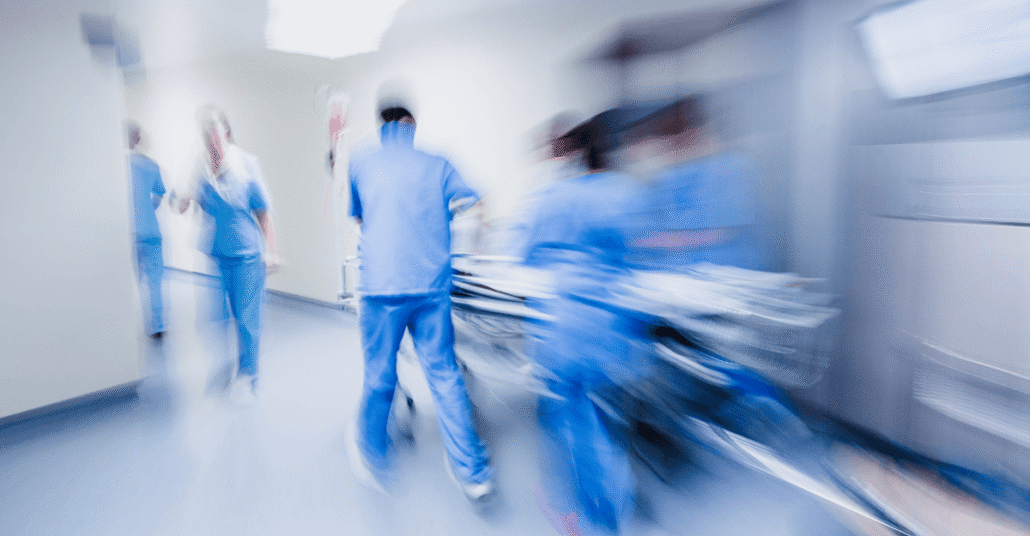
Accident at Elmhurst Hospital Emergency Room: When Does a Car Accident Become Medical Malpractice
A collision on the I-290 extension or a pile-up at the busy intersection of North York Street and North Avenue is a traumatic event. When paramedics arrive, the immediate priority is stabilization and transport, often to the Level II Trauma Center at Elmhurst Hospital on Brush Hill Road. For injured residents of Elmhurst, Villa Park, and Lombard, the emergency room represents safety and the beginning of recovery.
However, the chaotic environment of an emergency department can sometimes lead to preventable errors. When a crash victim enters the hospital, they bring with them the injuries caused by the collision. When they leave or if their condition deteriorates unexpectedly, it is not always clear whether the harm resulted solely from the crash or if medical negligence played a role. Distinguishing between the original injury and subsequent medical malpractice is one of the most complex areas of personal injury law in Illinois.
The Intersection of Personal Injury and Medical Negligence
Medical malpractice cases arising from emergency room visits differ significantly from standard elective procedure claims. The emergency room at Elmhurst Hospital is a high-pressure environment where physicians must make split-second decisions. However, urgency does not excuse a deviation from the accepted standard of care.
When a patient arrives following a high-speed impact on Route 83, the attending medical team has a duty to perform a thorough assessment. This includes ordering appropriate imaging, stabilizing vital signs, and consulting with specialists. If a physician dismisses a patient too early or fails to diagnose a life-threatening condition like an internal hemorrhage, the legal ground shifts from a standard car accident claim to a potential medical malpractice lawsuit.
Common ER Errors Following Traffic Accidents
- Failure to Diagnose Internal Bleeding: Blunt force trauma from seatbelts or airbags can cause liver or spleen lacerations that are not immediately visible. Failure to order a CT scan can be fatal.
- Missed Fractures: In the rush to treat obvious wounds, hairline fractures or spinal injuries may be overlooked, leading to improper setting and permanent mobility issues.
- Medication Errors: Administering anticoagulants to a patient with a brain bleed (subdural hematoma) can have catastrophic consequences.
- Improper Discharge: Sending a patient home with instructions to rest when they are actually suffering from a developing crisis, such as a pulmonary embolism.
Can I Sue the Hospital if They Make My Car Accident Injuries Worse?
Yes, under the legal doctrine of subsequent medical malpractice, you can pursue a claim if a healthcare provider’s negligence exacerbates your original injuries or causes new ones. If a doctor, nurse, or hospital staff member deviates from the medical standard of care and that deviation results in additional harm distinct from the initial accident, they can be held liable for those specific damages. The law recognizes that while the original driver caused the need for medical care, they are not responsible for independent acts of professional negligence that occur at the hospital.
When a victim is injured by a negligent driver, the law generally holds that driver responsible for all foreseeable consequences, including the risk that medical treatment might not be perfect. However, Illinois law allows plaintiffs to seek compensation directly from medical providers when their conduct falls below the professional standard of care. This creates two distinct layers of liability:
- The Original Tortfeasor (The Driver): Liable for the accident and the initial injuries.
- The Successive Tortfeasor (The Hospital/Doctor): Liable for the aggravation of those injuries or new injuries caused by their negligence.
Proving this requires distinguishing which damages strictly belong to the crash and which belong to the malpractice. For example, if a driver causes a leg fracture, but the emergency room surgeon sets the bone incorrectly, requiring three additional surgeries, the driver is responsible for the leg break, but the surgeon (and hospital) may be liable for the pain, suffering, and cost associated with the corrective surgeries.
Who Is Responsible: The At-Fault Driver or the Negligent Doctor?
In Illinois, both parties may share liability, but the specific apportionment of fault depends on the nature of the injuries and the timing of the negligence. The driver is typically liable for the initial injury and the foreseeable medical treatment that follows; however, if the medical provider’s negligence is gross or creates a distinct, new injury, the liability may shift significantly or be shared under principles of contribution. Courts often must determine which portion of the plaintiff’s suffering is attributable to the crash and which portion resulted from the medical error.
This scenario often invokes the concept of “joint and several liability” or distinct causes of action. From a strategic legal standpoint, it is often necessary to file suit against both the driver and the medical providers to ensure full compensation. If you sue only the driver, their defense team will likely argue that your permanent disability was caused by the doctor’s error, not the crash. If you sue only the doctor, they will argue the damage was done by the 60 mph impact on Roosevelt Road.
To navigate this, your legal team must utilize medical experts to create a clear timeline of damage.
- The Baseline: What was the medical status of the patient immediately upon arrival at Elmhurst Hospital?
- The Deviation: At what point did the medical care fail? (e.g., the 2-hour delay in ordering a scan).
- The Result: What is the difference between the patient’s current condition and the expected outcome had proper care been administered?
The Challenge of the “Standard of Care” in Emergency Medicine
In a medical malpractice lawsuit filed in the 18th Judicial Circuit Court in Wheaton, the plaintiff must prove that the defendant failed to act as a “reasonably careful” physician would have under similar circumstances.
In an emergency room context, this standard is nuanced. Experts—typically other emergency medicine physicians—must testify regarding what a competent doctor would have done. They will evaluate whether the staff at Elmhurst Hospital followed established protocols for trauma care.
Factors Influencing the Standard of Care
- Triage Protocols: Did the nursing staff correctly categorize the severity of the patient’s condition upon arrival?
- Diagnostic Availability: Did the physician utilize available technology (MRI, CT, X-ray) that a prudent doctor would have used given the symptoms?
- Stabilization: Did the staff take appropriate measures to stabilize the patient before transfer or discharge?
It is important to note that a bad outcome does not automatically equal malpractice. Medicine is an imperfect science, and trauma from a car accident can be fatal even with the best care. Liability attaches only when the care provided was negligent—meaning it fell below the acceptable professional threshold.
Venue and Jurisdiction: Why DuPage County Matters
Accidents occurring in Elmhurst and subsequent treatment at Elmhurst Hospital generally fall under the jurisdiction of the Circuit Court of DuPage County. While geographically close to Cook County, the legal landscape in DuPage is distinct.
The jury pool in DuPage County is demographically different from Chicago, often viewed as more conservative regarding damages. Furthermore, the judges in Wheaton adhere to strict case management schedules. Local knowledge of the 18th Judicial Circuit’s procedures is vital for the success of a case.
Procedural Requirements in Illinois Malpractice Cases
Before a lawsuit can even be filed against a hospital or physician in Illinois, the plaintiff’s attorney must comply with Section 2-622 of the Code of Civil Procedure. This statute requires an “Affidavit of Merit.” Your attorney must consult with a qualified health professional who:
- Is knowledgeable in the relevant medical issues.
- Practices or teaches in the same area of medicine as the defendant.
- Has reviewed the medical records and determined there is a reasonable and meritorious cause for filing the action.
Without this affidavit, a malpractice complaint will be dismissed. This serves as a gatekeeping measure to prevent frivolous lawsuits, but it also means that your legal team must be prepared and have consulted with experts before filing the complaint.
Evidence Collection in Hybrid Accident-Malpractice Cases
Building a case that involves both vehicular negligence and medical malpractice requires a comprehensive approach to evidence. The investigation must cover the asphalt of the accident scene and the sterile corridors of the hospital.
From the Crash Scene (DuPage County/Elmhurst)
- Crash Reports: The Illinois Traffic Crash Report filed by the Elmhurst Police Department or DuPage County Sheriff provides the mechanism of injury. Knowing the speed and angle of impact helps medical experts understand what injuries should have been expected.
- Witness Statements: Bystanders who saw the victim conscious and talking immediately after the crash can be crucial in proving that a subsequent coma was caused by medical mismanagement, not the impact itself.
From the Medical Facility
- Electronic Health Records (EHR): These logs show exactly when medications were administered and when doctors physically visited the patient. Gaps in the EHR can indicate a failure to monitor.
- Radiology Films: Actual DICOM files of X-rays and CT scans allow your hired experts to see what the ER doctor might have missed.
- Audit Trails: Modern hospital systems track every keystroke. We can determine if a record was altered after an adverse event occurred.
What Should I Do If I Suspect Medical Negligence After a Car Accident?
Secure your medical records immediately and contact an attorney who handles both personal injury and medical malpractice before speaking to hospital risk management. It is critical to preserve the evidence of your treatment timeline and to avoid giving statements that could be used to minimize the hospital’s liability. Do not accept a quick settlement offer from the at-fault driver’s insurance without understanding the full scope of your injuries, as this could inadvertently release the medical providers from liability, depending on how the release is drafted.
The interplay between auto insurance settlements and malpractice claims is perilous. If you sign a general release with the driver’s insurance company (e.g., State Farm or Allstate), the language might be broad enough to technically release “all other persons, firms, or corporations” from liability regarding the event. While Illinois courts have specific rules about intent in these releases, signing the wrong document can destroy your malpractice case before it begins.
Steps to Take
- Do Not Sign Releases or Authorizations: Never sign any document presented by an insurance company representative or hospital administrator, particularly those that waive your rights or authorize the release of your medical information to third parties, without first having a qualified personal injury or medical malpractice attorney review them. These documents are often designed to protect the hospital or insurer, not you.
- Request a Complete and Certified Copy of Your Medical Records: Immediately request a complete and certified copy of your entire medical chart from Elmhurst Hospital or the treating facility. This includes, but is not limited to, the physician’s orders, progress notes, laboratory and pathology reports, complete nursing notes, and all original imaging scans (X-rays, CTs, MRIs). Do not accept a mere summary; the full record is crucial for any potential legal review.
- Document the Full Timeline of Events: Write down a detailed, chronological account of everything you can recall regarding your experience in the Emergency Room. This record should start from your arrival and include the exact time you reported your symptoms, the length of your wait time, the specifics of what you communicated to the triage nurses and medical staff, and the precise instructions and diagnoses provided by the attending physician before your discharge.
- Seek an Immediate Second Medical Opinion: If you were discharged from the hospital and continue to experience pain, worsening symptoms, or a persistent feeling that your injury or condition was improperly diagnosed or treated, you must seek an immediate second opinion from a different medical facility or a specialist. Your personal health and safety are the absolute priority. A new diagnosis or treatment plan from an independent facility can serve as powerful, objective evidence of a potential misdiagnosis or error by the first facility.
Contact SFG Law Firm for a Case Evaluation
If you or a loved one suffered injuries in a vehicle collision and believe that subsequent medical errors at Elmhurst Hospital or another local facility compounded the harm, you need legal counsel who understands the complexity of these hybrid cases. We can help you untangle the liability, protect your rights against powerful hospital systems and insurance carriers, and fight for the compensation required to move forward.
Call SFG Law Firm at 708-942-8400 or complete our online contact form to schedule a confidential consultation. We serve clients throughout DuPage County, including Elmhurst, Wheaton, Naperville, and Oak Brook.





Leave a Reply
Want to join the discussion?Feel free to contribute!