
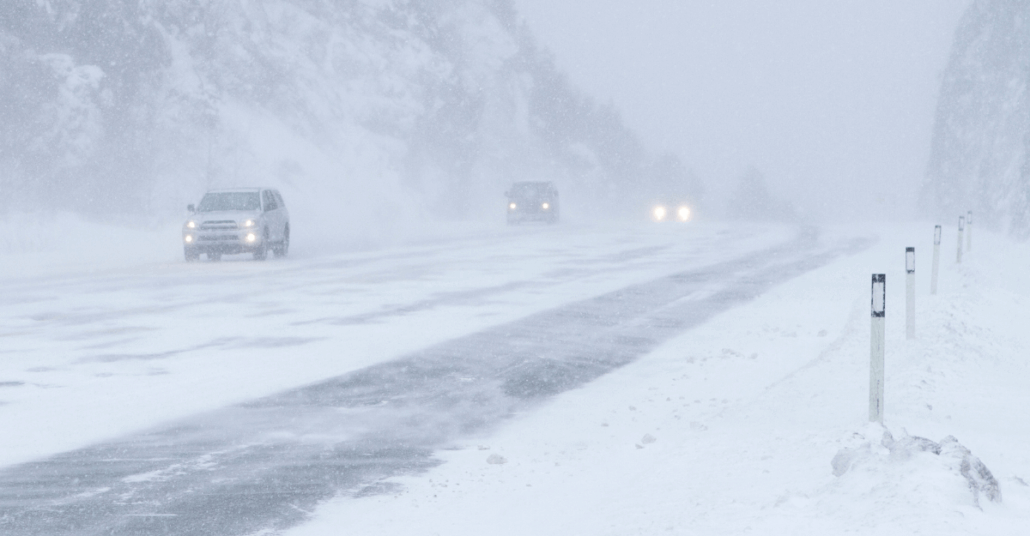
Accident on Roosevelt Road in Glen Ellyn: Is the Village Liable for Poor Road Conditions?
Anyone living in Glen Ellyn knows that driving down Roosevelt Road (Route 38) is rarely a calm experience. It serves as a major artery connecting the western suburbs, funneling thousands of vehicles daily past busy shopping centers, restaurants, and intersections like Park Boulevard and Main Street. While drivers expect traffic congestion, they rarely anticipate that the road itself might be the cause of a serious accident.
Sudden tire blowouts from deep potholes, loss of control on uneven pavement, or collisions caused by confusing lane markings are unfortunate realities. When an accident is caused not by another driver, but by the condition of the roadway itself, the path to recovery becomes significantly more complicated. You are no longer dealing with a private insurance company but potentially with a government entity.
The Legal Hurdle: Sovereign Immunity and the Tort Immunity Act
The first concept to grasp in a municipal liability case is that you are suing the government. Historically, the doctrine of “sovereign immunity” prevented citizens from suing the King. In modern American law, this concept survives in a modified form. In Illinois, it is codified primarily through the Local Governmental and Governmental Employees Tort Immunity Act.
This Act provides villages, cities, and other local public entities with broad protection against lawsuits. It is not enough to simply show that the road was in bad shape. To succeed in a claim against the Village of Glen Ellyn or the State of Illinois, a plaintiff must overcome higher legal standards than in a typical car accident claim.
Key protections for the government include:
- Discretionary Immunity: Government officials are often immune from liability for decisions that involve policy-making or discretion, such as deciding how to allocate a limited budget for road repairs.
- Notice Requirements: The law does not require the government to fix a problem it did not know about.
- Natural Accumulations: The Village is generally not liable for accidents caused by natural ice or snow, unless their removal efforts created a new, unnatural hazard.
Determining Jurisdiction: Who Owns Roosevelt Road?
Before you can file a claim, you must identify the correct defendant. This is one of the most common pitfalls in roadway defect cases. Many drivers assume that because an accident happened within the borders of Glen Ellyn, the Village is responsible. However, Roosevelt Road is a state highway (Illinois Route 38).
Jurisdiction typically breaks down as follows:
- State of Illinois (IDOT): The Illinois Department of Transportation is generally responsible for the maintenance of the travel lanes on state routes like Roosevelt Road. Claims against the state must often be filed in the Illinois Court of Claims, which has its own distinct set of rules and limits on damages.
- Village of Glen Ellyn: The Village is typically responsible for local roads that feed into Roosevelt Road, as well as sidewalks, adjacent parking areas, and sometimes specific intersections or traffic control devices, depending on maintenance agreements.
- County Jurisdiction: Certain intersecting roads, like Lambert Road or parts of Park Boulevard, may fall under DuPage County jurisdiction.
Filing a lawsuit against the wrong entity can be fatal to your case. If you sue the Village for a pothole that IDOT was responsible for repairing, and the statute of limitations expires while you are fighting the wrong battle, you may lose your right to compensation entirely.
What Constitutes a “Dangerous Condition”?
Not every bump in the road justifies a lawsuit. Illinois courts recognize that it is impossible for any municipality to keep miles of pavement in perfect condition 24 hours a day. To establish liability, you must prove that the property was not in a “reasonably safe condition.”
Examples of actionable defects may include:
- Deep Potholes: Large depressions capable of causing a driver to lose control or blow out a tire, specifically those that have existed for a significant period.
- Drop-Offs: Steep drop-offs between the roadway and the shoulder that can cause a vehicle to flip if a wheel drifts off the pavement.
- Obstructed Views: Overgrown vegetation maintained by the municipality that blocks stop signs or sightlines at intersections.
- Malfunctioning Signals: Traffic lights that are stuck or completely dark for an extended period without temporary traffic control measures.
- Missing Signage: Stop signs or yield signs that have been knocked down and not replaced in a timely manner.
- Pooling Water: Drainage defects that cause water to pool and freeze on the roadway, creating an unnatural ice patch.
The Requirement of Notice: Proving They Knew
The most significant barrier to winning a road defect case is the “Notice” requirement under Section 3-102 of the Tort Immunity Act. You must prove that the Village of Glen Ellyn (or the responsible entity) had either actual or constructive notice of the dangerous condition in a reasonably adequate time to correct it.
Actual Notice
This occurs when the municipality is directly informed of the problem.
- Records of resident complaints filed with the Village.
- Police reports from previous accidents at the same location caused by the same defect.
- Work orders showed a maintenance crew had previously visited the site.
Constructive Notice
This is a legal concept used when there is no direct record of a complaint. You must prove that the defect was so obvious and existed for such a long time that the Village should have known about it if they were exercising reasonable care.
- A massive pothole that has been growing for six months implies constructive notice.
- A pothole that formed yesterday due to a sudden freeze-thaw cycle typically does not.
The Duty of Ordinary Care for Intended Users
Another complexity in Illinois law involves the status of the person injured. The Tort Immunity Act states that a local public entity only owes a duty of care to people who are “legally permitted” and “intended” users of the property.
This distinction is vital:
- Drivers on the Roadway: You are clearly an intended user of Roosevelt Road.
- Pedestrians in Crosswalks: You are an intended user.
- Jaywalkers: If you cross Roosevelt Road mid-block outside of a crosswalk and trip on a pothole, the municipality likely owes you no duty of care, as the roadway is not “intended” for pedestrian traffic at that specific location.
- Bicyclists: This varies by municipality and specific road designation. If there is no bike lane and the road is not a designated bike route, proving the Village owed a duty to a cyclist for a road defect can be challenging.
Evidence Collection Strategy
Because the burden of proof is high, the evidence gathered in the days immediately following the accident is vital. Waiting even a week can result in evidence being lost—road crews may come out and patch the pothole, erasing the proof of how deep or dangerous it was.
Essential evidence includes:
- Measurements: Photographs of the defect with a ruler or a common object to show scale. A close-up of a pothole is not enough; you need to show depth and width.
- 311 and Village Records: Freedom of Information Act (FOIA) requests can be used to pull logs of all complaints made about that section of Roosevelt Road in the past year.
- Google Maps/Street View: Historical imagery can sometimes prove that a crack or pothole existed months or even years prior to the accident.
- Witness Statements: Testimony from local business owners or residents who can confirm, “That hole has been there all winter.”
- Police Reports: The crash report from the Glen Ellyn Police Department or the DuPage County Sheriff is the foundational document for the timeline of the event.
Comparative Negligence in Road Defect Cases
The Village or State will almost certainly argue that you are partially responsible for the accident. They may claim you were driving too fast, not paying attention, or should have seen and avoided the pothole. This brings the Modified Comparative Negligence rule into play.
How fault is apportioned:
- If you are found to be 50% or less at fault, you can still recover damages, but your award is reduced by your percentage of fault.
- If you are found to be 51% or more at fault, you are barred from recovering any compensation.
For example, if a jury determines your damages are $100,000 but decides you were 20% at fault for looking at your radio when you hit the pothole, you would recover $80,000. Defense attorneys for municipalities are skilled at arguing that a driver exercising “due care” would have avoided the hazard.
The Shortened Statute of Limitations
One of the most dangerous traps for unrepresented victims in cases against the government is the deadline for filing suit.
- Standard Personal Injury: In Illinois, you typically have two years to file a lawsuit against a private individual or company (like another driver).
- Municipal Liability: For claims against a local public entity like the Village of Glen Ellyn, the statute of limitations is generally one year.
If you attempt to file a lawsuit one year and one day after the accident, your case will almost certainly be dismissed with prejudice. Claims against the State of Illinois (IDOT) also have strict notice filing requirements with the Court of Claims that differ from circuit court lawsuits.
Potential Damages Recoverable
Despite the legal hurdles, victims of accidents caused by roadway defects have the right to be made whole. When a case is successfully proven, compensation is designed to restore the victim to the position they were in before the negligence occurred.
Recoverable damages typically fall into two categories:
Economic Damages
- Medical Expenses: Costs for emergency room visits (such as at nearby Central DuPage Hospital), surgeries, physical therapy, and medication.
- Lost Wages: Compensation for time missed from work due to recovery.
- Property Damage: The cost to repair or replace your vehicle.
Non-Economic Damages
- Pain and Suffering: Compensation for the physical pain and emotional distress caused by the injury.
- Loss of Normal Life: Damages for the inability to pursue hobbies, perform daily tasks, or enjoy life as you did before the accident.
- Disfigurement: Compensation for scarring or permanent physical alteration.
Common Injuries in Road Defect Accidents
Roadway defect accidents often involve sudden, violent stops or loss of control that can lead to severe physical trauma. The force of hitting a deep pothole at 40 mph or swerving into a median can cause injuries that require long-term care.
We frequently see injuries such as:
- Traumatic Brain Injuries (TBIs): From the head striking the steering wheel or window.
- Whiplash and Cervical Spine Injuries: Caused by the sudden deceleration of impact.
- Fractures: particularly to the wrists and arms (from bracing for impact) or legs.
- Soft Tissue Damage: Tears to ligaments and tendons that may require surgical repair.
Steps to Take Immediately After the Accident
If you are involved in a crash on Roosevelt Road or any street in Glen Ellyn that you suspect was caused by a road defect, specific actions can protect your potential claim.
Action Plan
- Call the Police: Ensure an official report is created. Make sure to tell the officer specifically that a road defect caused the crash so it is noted in the narrative.
- Photograph the Scene: Safely get photos of the road condition immediately. Traffic will eventually destroy evidence, or the Village may repair it.
- Seek Medical Attention: Do not assume you are fine. Adrenaline masks pain. Go to an urgent care or hospital immediately to create a medical record linking your injuries to the time of the crash.
- Do Not Give a Statement to the Village’s Insurance: They may contact you quickly. Politely decline to discuss the incident until you have legal counsel.
- Preserve Your Vehicle: If your car is totaled, do not let the insurance company scrap it immediately if mechanical evidence is needed to prove the defect caused the damage (e.g., a bent rim matching the pothole).
How SFG Law Firm Assists Victims
Cases involving municipal liability require a distinct approach compared to standard auto accidents. The procedural rules are stricter, and the defenses available to the government are robust.
Our approach includes:
- Jurisdictional Analysis: We immediately determine whether the road is owned by the Village, County, or State to ensure claims are filed in the correct venue.
- Evidence Preservation: We send spoliation letters to prevent the destruction of maintenance logs or surveillance footage.
- Expert Consultation: We work with accident reconstructionists and civil engineers who can testify regarding proper road maintenance standards and whether the defect violated mandatory safety codes.
- Navigating Immunity: We structure claims to fit within the exceptions to the Tort Immunity Act, focusing on the specific duties the government failed to uphold.
Protecting Your Rights After a Road Defect Accident
A drive down Roosevelt Road should not end in a hospital visit or financial ruin because of a preventable road hazard. While the law makes it difficult to sue the government, it is not impossible. The key lies in early investigation, precise identification of the responsible party, and a deep knowledge of the Illinois Tort Immunity Act. If you or a loved one has been injured due to a pothole, dangerous intersection, or poor road maintenance in Glen Ellyn, Wheaton, or the surrounding areas, professional guidance is often necessary to navigate the complexities of municipal immunity.
Contact SFG Law Firm today for a free consultation to discuss the details of your accident. We can help you determine if you have a valid claim and what steps are necessary to secure the compensation you deserve.


Leave a Reply
Want to join the discussion?Feel free to contribute!