
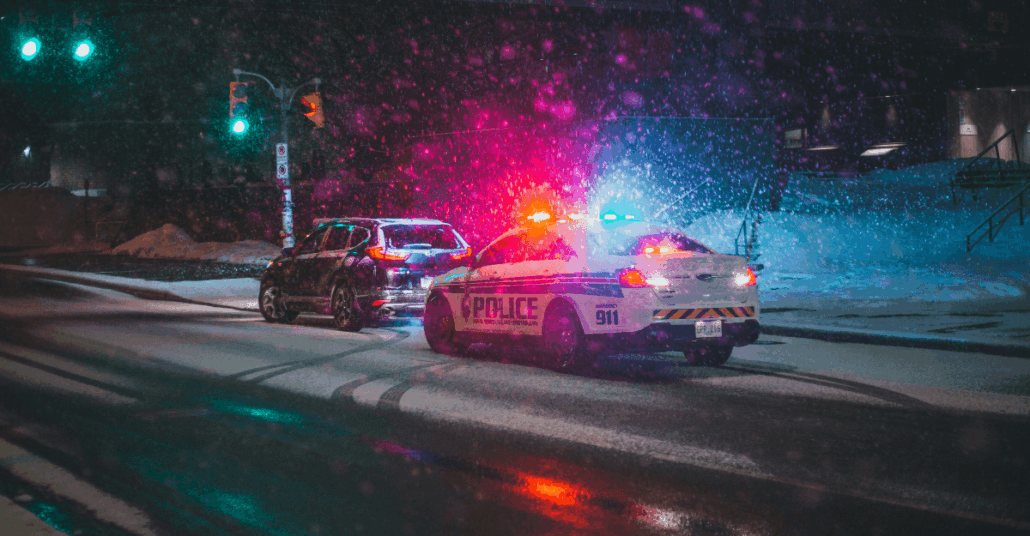
Accidents on LaGrange Road in Orland Park: Who Is Liable for Crashes at Dangerous Intersections?
Anyone who lives or works in the Orland Park area knows the daily reality of driving on LaGrange Road. Known officially as U.S. Route 45, this sprawling multi-lane artery is the commercial heartbeat of the south suburbs. It is also a corridor defined by heavy traffic, constant stop-and-go, and an unnerving number of car accidents. Navigating the stretch from 135th Street down past 179th, especially around the Orland Square Mall and the 159th Street corridor, requires constant defensive driving.
When a collision does happen here—whether it is a chain-reaction rear-end crash near 151st Street or a T-bone accident at 143rd—the aftermath is chaotic. Amid the blare of horns and the arrival of Orland Park police, the most pressing question for those involved is, “Who is at fault?” The answer is rarely straightforward.
Why Is LaGrange Road a Magnet for Vehicle Collisions?
The design and use of LaGrange Road create a perfect storm for auto accidents. It is not just one factor, but the combination of many, that makes this road so challenging for drivers. Understanding these elements is the first step in building a case for liability.
- Immense Traffic Volume: LaGrange Road serves as a primary north-south commuter route while also being the main commercial strip for Orland Park, Tinley Park, and surrounding communities. The sheer number of vehicles is a primary contributor.
- Constant Retail Access Points: The road is lined with hundreds of businesses, strip malls, and shopping centers, including Orland Square, Orland Park Crossing, and countless others. This creates a non-stop flow of traffic entering and exiting the roadway, often with inadequate deceleration lanes.
- Complex Intersections: Major intersections like 159th Street, 151st Street, and 143rd Street are massive, multi-lane crossings with complex, multi-phase traffic signals. This complexity increases the opportunity for driver error.
- Aggressive and Distracted Driving: The high-stress, stop-and-go nature of the road leads to driver impatience. This manifests as aggressive lane changes, speeding to beat yellow lights, and following too closely. Compounding this is the prevalence of distracted driving, as people check GPS for store locations or use their phones in gridlocked traffic.
- Mix of Traffic: You have local residents running errands, commuters heading to I-80 or I-55, delivery trucks, and semi-trailers all competing for space, leading to dangerous interactions between vehicles of different sizes and speeds.
Orland Park’s Most Dangerous Intersections on LaGrange Road
While a crash can happen anywhere, our experience shows that collisions cluster around a few key “hotspots” on LaGrange Road. These intersections are well-known to local drivers and law enforcement.
- LaGrange Road and 159th Street (IL-7): This is arguably the epicenter. As two major arterial roads cross, the volume is staggering. It is a frequent location for severe side-impact collisions from red-light runners and left-turn accidents where drivers misjudge the speed of oncoming traffic.
- LaGrange Road and 151st Street: With direct access to Orland Square Mall, this intersection is plagued by retail-bound traffic. Drivers making left turns into or out of the mall area are often in conflict with through traffic on LaGrange, leading to serious T-bone crashes.
- LaGrange Road and 143rd Street: Another major east-west connector, this intersection sees high speeds as traffic flows from more residential areas. Rear-end collisions are common here as drivers fail to stop in time for backed-up traffic.
- LaGrange Road and 135th Street: This intersection serves as a key border with Palos Park and sees heavy commuter use. The heavy volume and frequent turning maneuvers make it a common site for sideswipe and lane-change accidents.
How Is Fault Determined in Common LaGrange Road Accidents?
Liability is not automatic. It must be proven. In Illinois, “liability” is the legal term for responsibility, and it is based on the concept of negligence. To hold another driver liable, you must demonstrate that they were negligent.
This involves proving four specific elements:
- Duty: The other driver owed you a “duty of care.” This is a given for all motorists, who have a legal duty to follow traffic laws and drive safely.
- Breach: The driver “breached” or violated that duty.
- Causation: The driver’s breach was the direct and proximate cause of the accident and your injuries.
- Damages: You suffered actual harm as a result, such as medical bills, vehicle damage, lost wages, and pain.
How these elements apply depends on the type of crash.
Left-Turn Accidents
These are very common at intersections like 151st and 159th. The Illinois Vehicle Code is clear: a driver turning left must yield the right-of-way to oncoming traffic. A driver who turns left and is struck by an oncoming car is usually presumed to be at fault.
However, liability can be shared if the oncoming driver was also negligent by:
- Speeding excessively, making it impossible for the turning driver to judge the gap.
- Running a red light or stale yellow light.
- Driving with no headlights on at night.
Rear-End Collisions
In the stop-and-go traffic south of 159th Street, rear-end accidents are a daily event. There is a legal presumption that the driver who hits the car in front of them is at fault. This is based on the duty of every driver to maintain a safe following distance.
But fault can be placed on the lead driver if they:
- Suddenly “brake-checked” the rear driver for no reason.
- Had non-functioning brake lights.
- Reversed suddenly into traffic.
- Pulled out into the lane unsafely and were immediately struck.
T-Bone (Side-Impact) Accidents
These are among the most dangerous crashes on LaGrange Road, often resulting from one driver running a red light at a major intersection. Liability here seems simple—the driver who ran the red light is at fault. The challenge is proving it. Without an independent witness or video, it often becomes a “he-said, she-said” dispute where each driver claims to have had the green light.
Sideswipe and Unsafe Lane Change Accidents
On the six-to-eight-lane stretches of LaGrange, drivers are constantly merging and changing lanes. Every driver has a duty to ensure their blind spot is clear and it is safe to move over. The driver who leaves their lane of travel and strikes another vehicle is typically the one at fault. Proving this often comes down to the point of impact on the vehicles and witness testimony.
What If I Am Partially to Blame for the Accident?
This is one of the most common worries we hear from clients. What if you were driving a few miles over the speed limit when the other person ran the red light? What if you were checking your mirror for a split second when the car in front of you slammed on its brakes?
Many people incorrectly believe that if they are even 1% at fault, they cannot recover any compensation. This is not true.
Illinois follows a legal doctrine called “modified comparative negligence,” codified in state law (735 ILCS 5/2-1116). This law sets up a specific system for handling shared fault:
- You CAN recover damages if you are 50% or less at fault. Your total compensation (damages) will simply be reduced by your percentage of fault.
- You CANNOT recover any damages if you are 51% or more at fault. This is known as the “51% bar.” If you are found to be the primary cause of the crash, you are barred from receiving compensation from the other driver.
How Is the Final Percentage of Fault Proven?
Since the entire case hinges on this percentage, a strong claim requires objective evidence. An insurance adjuster’s opinion is not the final word. The percentage is determined by facts.
Key evidence in a LaGrange Road accident claim includes:
- The Orland Park Police Report: This is the first piece of evidence. It will contain the officer’s narrative of events, diagrams of the crash scene, and any traffic citations issued. A citation for “Failure to Reduce Speed” or “Improper Lane Usage” is powerful evidence.
- Witness Statements: Independent witnesses who saw the crash are invaluable. A neutral third party who can confirm who had the green light or who swerved first can break a “he-said, she-said” deadlock.
- Surveillance Video: This is the most powerful evidence of all. Many businesses along LaGrange Road, from gas stations to banks to the Orland Square Mall itself, have security cameras facing the road. This footage is often deleted quickly, so it is vital to act fast to preserve it.
- Accident Reconstruction: In cases involving severe injuries or fatalities, experts can be hired. They analyze vehicle “black box” data, skid marks, and property damage to scientifically recreate the crash and establish speeds, points of impact, and fault.
- Cell Phone Records: If you suspect the other driver was texting, phone records can be subpoenaed during a lawsuit to prove they were distracted at the exact moment of the collision.
What Steps Should I Take After a Crash on LaGrange Road?
The actions you take in the minutes and hours after the accident will have a significant impact on your ability to prove liability and recover compensation.
- Move to Safety: If possible, move your vehicle out of the active lanes of LaGrange Road to a nearby side street or parking lot to avoid a secondary collision.
- Call 911 Immediately: Report the accident to the Orland Park Police. Insist on an officer coming to the scene to file an official Illinois Traffic Crash Report. This report is a vital piece of evidence.
- Document the Scene: Use your phone to take as many pictures and videos as possible. Get photos of the damage to both cars, the other driver’s license plate, the intersection, traffic signals, road conditions, and any visible injuries.
- Exchange Information: Get the other driver’s name, address, phone number, driver’s license number, and insurance policy information.
- Get Witness Information: If anyone stops, get their name and phone number.
- Do Not Admit Fault: This is critical. Do not apologize or say things like “I did not see you.” These statements can be used against you as an admission of guilt. Simply state the facts of what you saw.
- Seek Medical Attention: Adrenaline can mask serious injuries. Go to an emergency room at Palos Hospital, Silver Cross, or a local urgent care clinic. This not only protects your health but also creates a medical record linking your injuries to the time and date of the crash.
The Orland Park Complication: Cook County vs. Will County
Orland Park has a unique geographic feature that adds a layer of legal complexity. The village famously straddles both Cook County and Will County. LaGrange Road itself (U.S. 45) serves as a dividing line for part of the village.
Where your accident occurred—sometimes by a matter of feet—determines which county courthouse your lawsuit must be filed in.
- An accident on the east side of the county line (e.g., near Orland Square) will likely be filed in the Cook County Fifth Municipal District courthouse in Bridgeview.
- An accident on the west side of the line will fall under the jurisdiction of the Will County Courthouse in Joliet.
These are two entirely different court systems with different local rules, procedures, and even different tendencies among judges and juries. Navigating this jurisdictional issue requires a law firm with specific experience practicing in both courthouses.
How an Attorney Investigates a LaGrange Road Accident Claim
Handling a complex accident claim on your own, especially while recovering from an injury, puts you at a severe disadvantage. An insurance adjuster’s job is to protect their company’s profits by paying as little as possible. An attorney’s job is to protect your rights and fight for the full compensation you deserve.
A dedicated personal injury attorney will:
- Launch an Immediate Investigation: This includes sending legal “spoliation letters” to businesses along LaGrange Road, demanding they preserve any video footage of the crash before it is erased.
- Handle All Insurance Communications: Your lawyer will speak to all insurance adjusters on your behalf, protecting you from recorded statements designed to trap you into admitting partial fault.
- Gather and Analyze Evidence: This involves obtaining the official police report, interviewing witnesses, and hiring an accident reconstruction expert if needed.
- Calculate Your Total Damages: We will collect all medical bills, proof of lost wages, and work with medical providers to understand your future treatment needs, pain, and suffering.
- Navigate the Correct Legal System: We will determine the proper jurisdiction (Cook or Will County) and manage all legal filings, deadlines, and court appearances.
- Negotiate from a Position of Strength: We will build a comprehensive demand package supported by evidence to negotiate for a full and fair settlement or, if necessary, take your case to trial.
Contact Our Orland Park Car Accident Attorneys Today
An accident on LaGrange Road is more than an inconvenience; it can be a life-altering event. You should not have to fight with insurance companies while trying to heal. If you or a loved one was injured in a car crash in Orland Park or the surrounding suburbs, contact SFG Law Firm for a free, no-obligation consultation. Our attorneys are deeply familiar with the challenges of accidents on LaGrange Road and have extensive experience in both the Cook County and Will County court systems. Let us review the facts of your case and explain your legal options.
Call us today at 708-942-8400 or fill out our online contact form to get started. We are here to help you navigate the path forward.


Leave a Reply
Want to join the discussion?Feel free to contribute!