
Hit by a Car in Orland Square Mall Parking Lot: Can I Sue the Mall or the Driver?
A casual Saturday afternoon trip to Orland Square Mall often involves circling for a spot near the Apple Store or navigating the chaotic lanes near the food court entrance. Most shoppers in Orland Park are focused on their errands, checking their phones for coupons, or watching out for other cars fighting for a space. Few pedestrians anticipate that a walk from their vehicle to the mall entrance could end in a life-altering collision.
When a pedestrian is struck by a vehicle in a private parking lot, the aftermath is confusing. Unlike a standard intersection crash on LaGrange Road, accidents on private property involve a complex web of potential liability. Victims are often left facing mounting medical bills, lost time at work, and severe pain, all while insurance companies point fingers at one another.
Why Orland Square Mall’s Parking Lot Is a High-Risk Zone
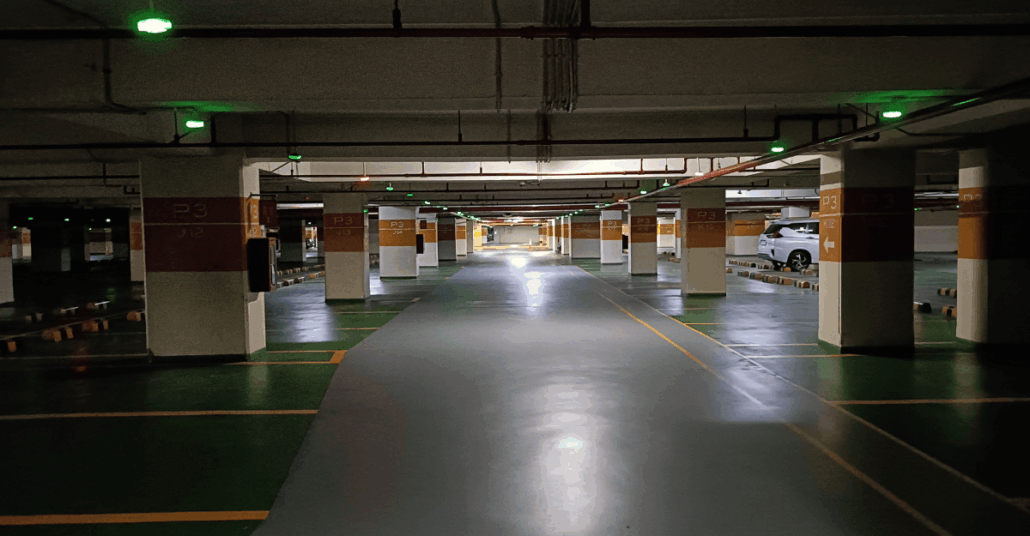
The parking areas surrounding Orland Square Mall are not merely static slabs of asphalt; they are active, often aggressive environments. The layout requires pedestrians to share space with vehicles that are constantly stopping, starting, backing up, and turning. This specific location presents unique hazards that contribute to pedestrian accidents.
- High Traffic Volume: As one of the busiest shopping centers in the Chicago south suburbs, the volume of vehicles entering from 151st Street and 94th Avenue creates constant congestion.
- Distracted Drivers: Drivers are often looking for parking spots, checking GPS directions, or texting, meaning their eyes are rarely on the road ahead.
- Obstructed Views: Large SUVs and trucks parked in end spots can block the line of sight for drivers turning into lanes, hiding pedestrians from view until impact is unavoidable.
- Confusing Right-of-Way: Unlike public roads with clear stop signs and traffic signals, parking lot intersections often rely on drivers using caution, which many fail to do.
- Seasonal Hazards: During Illinois winters, snow piles can force pedestrians to walk in the center of driving lanes, further increasing exposure to moving traffic.
The Primary Target: Liability of the At-Fault Driver
In the majority of parking lot pedestrian accidents, the driver of the vehicle is the primary defendant. Even on private property, Illinois rules of the road regarding negligence still apply. Every driver has a duty of care to operate their vehicle safely and to keep a proper lookout for pedestrians.
To establish that the driver is liable, specific elements must be proven.
- Failure to Yield: Drivers must yield to pedestrians in crosswalks and main aisles.
- Speeding: While speed limits in parking lots are rarely posted above 15 mph, driving even at that speed can be considered negligent if traffic or weather conditions demand slower movement.
- Improper Backing: Many injuries occur when a driver backs out of a space without checking their blind spots or backup camera, striking a person walking behind the vehicle.
- Distraction: Evidence that a driver was using a phone or adjusting the radio at the time of the impact is strong proof of negligence.
When Is the Mall or Property Owner Liable?
While the driver is the obvious party to blame, there are situations where the condition of the parking lot itself played a significant role in the accident. This falls under the legal theory of premises liability. The owners and management companies of Orland Square Mall have a legal obligation to maintain their property in a reasonably safe condition for business invitees.
If the property owner knew or should have known about a dangerous condition and failed to fix it, they may be partially or fully responsible for the accident.
- Poor Lighting Design: If an accident occurs at night because overhead lights are burnt out or spaced too far apart, the mall may be liable for failing to provide adequate visibility.
- Confusing Signage: A lack of stop signs at busy lane intersections or faded crosswalk paint can create chaos where drivers and pedestrians are unsure who has the right of way.
- Potholes and Trip Hazards: If a pedestrian tries to dodge a vehicle and trips on a massive pothole that has been ignored for months, the property owner shares liability for the resulting injury.
- Snow and Ice Management: If snow was plowed into piles that block sightlines or force pedestrians into traffic, the snow removal contractor or the mall management could be held accountable.
The Concept of Constructive Notice in Premises Claims
Proving a claim against a large commercial property owner requires more than just showing that a dangerous condition existed. You must prove that the owner had notice of the problem. Illinois law distinguishes between two types of notice.
- Actual Notice: This occurs when an employee or manager was directly told about the hazard or observed it themselves. For example, if a security guard reported a series of burnt-out lights in Section D and no one fixed them, the mall had actual notice.
- Constructive Notice: This is more common in litigation. It asserts that the hazard existed for a long enough period that a reasonably careful property owner would have discovered and repaired it during regular inspections. A deep pothole or a stop sign that has been missing for weeks typically qualifies as constructive notice.
Determining Fault: Illinois Comparative Negligence Laws
A frequent defense used by both drivers and property owners is to blame the victim. They may argue that you walked out from between cars without looking or that you were distracted by your phone. In Illinois, this triggers the doctrine of modified comparative negligence.
This legal standard determines your eligibility for compensation based on your percentage of fault.
- 50 Percent Rule: You can recover damages as long as you are found to be 50 percent or less at fault for the accident.
- The 51 Percent Bar: If a jury finds you are 51 percent or more responsible for your own injuries, you are barred from recovering any compensation whatsoever.
- Reduced Recovery: If you are found partially at fault (e.g., 20 percent), your total financial award is reduced by that percentage.
Defense attorneys for insurance companies work aggressively to push a victim’s fault percentage over that 51 percent threshold to avoid paying a claim.
Evidence Preservation Strategies Immediately After the Crash
The moments following a collision are chaotic, but the actions taken can define the success of a future legal claim. Orland Square Mall is private property, which means local police may not issue citations in the same way they would on a public highway, making your own documentation vital.
- Call the Police: Insist on an accident report from the Orland Park Police Department. This provides an official record of the date, time, and parties involved.
- Request Security Footage: The mall has extensive surveillance camera systems. However, this footage is often overwritten quickly. An attorney can send a preservation letter to ensure this video is saved.
- Photograph the Scene: capture wide-angle shots of the parking lot, the position of the car, lighting conditions, and any obstructions like snow piles or delivery trucks.
- Identify Witnesses: Independent witnesses who saw the driver speeding or texting are incredibly valuable. Collect their names and phone numbers before they leave.
- Preserve Physical Evidence: Do not wash the clothes you were wearing or clean your shoes. Scuff marks or tears can help accident reconstructionists determine how the impact occurred.
Navigating the Claims Process with Multiple Insurance Policies
Parking lot pedestrian accidents often involve multiple layers of insurance coverage. Identifying the correct policies is necessary to ensure full compensation for serious injuries.
- The Driver’s Auto Insurance: This is typically the first line of coverage.
- Commercial Liability Policies: If the driver was working at the time (e.g., a delivery driver or rideshare operator), a corporate policy with higher limits may apply.
- Premises Liability Insurance: The mall owner and property management company carry substantial liability policies to cover injuries caused by property defects.
- Uninsured/Underinsured Motorist Coverage: If the driver who hit you has no insurance or state-minimum limits that fail to cover your medical bills, your own auto insurance policy may step in to cover the difference, even though you were a pedestrian.
Common Injuries Sustained by Pedestrians in Low-Speed Collisions
Even a vehicle moving at 10 mph carries significant mass and force. When a pedestrian is struck, there are two distinct impacts: the initial hit by the bumper or hood, and the secondary impact when the victim hits the ground.
We frequently see clients suffering from specific types of trauma in these cases.
- Lower Extremity Fractures: Tibia and fibula fractures are common as the car bumper strikes the lower legs directly.
- Traumatic Brain Injuries (TBI): If the pedestrian is knocked backward, their head may strike the pavement with force, causing concussions or intracranial bleeding.
- Rotator Cuff and Wrist Injuries: Victims often instinctively put their hands out to break their fall, leading to severe tears and fractures in the upper body.
- Spinal Disc Herniations: The twisting force of the impact can cause lasting damage to the lumbar or cervical spine, requiring surgical intervention.
The Role of Medical Documentation in Your Case
Medical records serve as the foundation of your claim for damages. Following an accident in Orland Park, it is vital to seek immediate care at a facility such as Palos Hospital or Silver Cross.
Insurance adjusters will look for gaps in treatment to argue that your injuries are not serious or were pre-existing.
- Immediate Evaluation: Go to the ER or urgent care immediately, even if you feel okay. Adrenaline often masks pain.
- Follow Up: Attend all scheduled appointments with specialists or physical therapists.
- Diagnostic Testing: MRIs and CT scans provide objective proof of internal injuries that X-rays might miss.
- Consistency: Be accurate when describing your symptoms to doctors. Inconsistencies in medical notes can be used against you in court.
Venue Matters: The Cook County Legal Landscape
Jurisdiction plays a strategic role in personal injury lawsuits. Orland Square Mall is located in Cook County. This means that if a lawsuit is filed, it will likely be heard at the Fifth Municipal District Courthouse in Bridgeview or the Richard J. Daley Center in downtown Chicago.
Cook County courts have specific procedural rules and case management schedules that differ from those of neighboring Will County. The jury pools also differ demographically. Corporate defendants and insurance carriers are very familiar with these venues and will have legal teams who are in these courthouses daily. Navigating this system requires a legal team that possesses deep local knowledge of the judges, the opposing counsel, and the procedural nuances of the Fifth District.
Why a Prompt Investigation Is Essential
Time acts against the victim in parking lot accident cases. Physical evidence disappears quickly.
- Surveillance Video: Many security systems loop and record over old footage every 7 to 30 days. Once it is gone, it cannot be retrieved.
- Physical Conditions: Potholes get filled, lights get replaced, and snow melts. Documenting the condition of the lot as it was at the moment of the accident is urgent.
- Witness Memory: Memories fade, and witnesses move away or change phone numbers. Securing statements early preserves the truth of what happened.
Compensation Available to Pedestrian Victims
The goal of a civil claim is to restore the victim, as much as possible, to the position they were in before the negligence occurred. Financial recovery covers both economic and non-economic losses.
- Medical Expenses: This includes past bills for emergency transport and surgery, as well as projected costs for future rehabilitation.
- Lost Income: Reimbursement for wages lost while recovering, and compensation for reduced earning capacity if the injury results in permanent disability.
- Pain and Suffering: Compensation for the physical pain and emotional distress caused by the trauma.
- Loss of Normal Life: Damages awarded for the inability to participate in hobbies, daily activities, or family events that were part of your life prior to the injury.
Contact SFG Law Firm for a Consultation
Being struck by a vehicle in a shopping center parking lot is a traumatic event that introduces immediate financial and physical instability into your life. The question of whether to sue the driver, the mall, or both is not always straightforward. If you or a family member has been injured at Orland Square Mall or any commercial property in the area, contact SFG Law Firm today. We can review the specific details of your incident, secure vital evidence before it is destroyed, and guide you through the process of recovery. Call us at 708-942-8400 or complete our online contact form to schedule a free, no-obligation case evaluation.


Leave a Reply
Want to join the discussion?Feel free to contribute!