

Hit by a Semi Truck at the I-80 and I-55 Interchange: What Makes This Area So Dangerous?
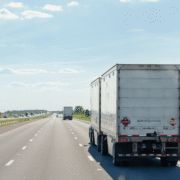
Anyone who drives through Will County is familiar with the sight. The massive, swirling interchange where Interstate 80 and Interstate 55 meet is a landmark of American logistics. It is the “Crossroads of America,” a point where goods and people funnel from coast to coast and from the Great Lakes to the Gulf of Mexico. It is also the site of terrifying and often catastrophic semi-truck accidents.
For a driver in a passenger vehicle, navigating this stretch of highway feels like driving through a canyon of 18-wheelers. The sheer volume is overwhelming. When one of these 80,000-pound vehicles collides with a car, the results are devastating. In the chaotic moments after such a violent crash, victims are left with serious injuries and a pressing question: How did this happen, and who is responsible?
What Makes the I-80/I-55 Interchange a Hotspot for Truck Accidents?
The interchange itself, located near Joliet, Shorewood, and Channahon, is a marvel of engineering, but it is also a functional bottleneck. Its design, combined with the explosive growth of the local logistics industry, has created a perfect storm for large-scale commercial vehicle collisions.
The primary factors include:
- Massive Traffic Volume: I-80 is one of the nation’s primary east-west corridors, and I-55 is the main artery connecting Chicago to the south. Their intersection is one of the busiest trucking hubs in the country.
- Constant Merging and Weaving: The interchange involves numerous lanes merging and splitting in a relatively short distance. A driver heading from I-80 east to I-55 north must cross multiple lanes of traffic, often conflicting with trucks trying to exit or continue on I-80.
- Aging Infrastructure: While improvements are ongoing, parts of this corridor were not designed to handle the current volume or weight of truck traffic, leading to wear, potholes, and challenging road conditions.
- Abrupt Congestion: Traffic can go from 70 mph to a dead stop with little warning, especially during rush hour or when there is construction. A distracted or following-too-closely truck driver does not have time to stop.
The CenterPoint Intermodal Factor
The single biggest contributor to the danger is something many local drivers may not even realize is there: the CenterPoint Intermodal Center in Joliet and Elwood. This massive inland port is the largest of its kind in North America.
What does this mean for drivers on I-80 and I-55?
- An Enormous Truck Magnet: This facility, along with other nearby intermodal parks, generates tens of thousands of truck trips every single day.
- Local Road Clog: These trucks do not just stay on the interstates. They flood local roads like Route 53 (which runs directly through the intermodal center), US-6, and Briggs Street as they move containers to and from the rail yards.
- Constant Interstate Access: The primary access points for these trucks are the I-80 and I-55 interchanges. This creates a constant, revolving door of trucks entering and exiting the highway, often driven by operators who may be in a hurry or unfamiliar with the complex merge patterns.
This concentration of freight activity means the I-80/I-55 interchange is not just a place trucks pass through; it is their destination and origin, dramatically increasing the density of semi-traffic and the risk of a serious collision.
Common Causes of Tractor-Trailer Collisions in This Area
While the environment is dangerous, these crashes are ultimately caused by human or mechanical failure. When we investigate a semi-truck crash on behalf of a client, we often find the cause is one of these preventable factors:
- Driver Fatigue: Federal “Hours of Service” (HOS) regulations limit how long a driver can be on the road. To meet tight deadlines, drivers may violate these rules or drive right up to their limit, severely dulling their reaction time.
- Distracted Driving: This includes texting, operating a GPS, or managing logbooks while driving. A truck at highway speed covers the length of a football field in just a few seconds.
- Speeding: Trucks have a much longer stopping distance than cars. A speeding truck, especially one that is fully loaded, cannot stop in time for sudden traffic congestion.
- Improper Lane Changes: Due to massive blind spots (or “no-zones”) on all four sides of a semi, a driver who fails to properly check before merging can easily crush a smaller vehicle.
- Poor Maintenance: Worn-out brakes, bald tires, or steering failures can be catastrophic. The trucking company is responsible for keeping its fleet in safe, working order.
- Unbalanced or Overweight Cargo: An improperly loaded trailer can shift during a turn or sudden maneuver, causing the driver to lose control and jackknife or roll over.
- Inadequate Driver Training: The driver may not have been properly trained on how to handle the complex I-80/I-55 merges or how to operate their specific vehicle.
Who Is Legally Responsible for a Semi-Truck Accident?
This is the most important difference between a car crash and a truck crash. In a car-versus-car accident, you are typically dealing with one other driver and their insurance. In a commercial truck crash, a network of parties may share the blame.
Identifying all responsible parties is vital for ensuring you can recover the full amount of compensation for your injuries. Potential defendants include:
The Truck Driver: For their direct negligence (e.g., speeding, distraction).
The Trucking Company (Motor Carrier): This is often the primary target. They can be held liable for their driver’s actions (vicarious liability) and for their own negligence, such as:
- Hiring an unqualified driver (negligent hiring).
- Failing to provide adequate training (negligent training).
- Forcing drivers to violate Hours of Service rules.
- Failing to maintain the truck (negligent maintenance).
The Freight Shipper or Broker: The company that hired the truck may be liable if they knowingly hired a carrier with a poor safety record or overloaded the trailer.
A Maintenance Facility: If a third-party shop performed faulty brake repairs or other negligent maintenance.
The Truck Manufacturer: If the crash was caused by a defective part, like a steering component or tire failure.
An experienced legal team will investigate every angle to identify all corporations and insurance policies that may be responsible for your injuries.
Investigating Liability: Uncovering the Truth
Trucking companies and their insurance providers start their investigation within minutes of a crash. They often dispatch a rapid-response team to the scene to gather evidence that favors them. You need a team on your side doing the same for you.
Proving fault in a truck accident requires a deep dive into evidence that is not available in a simple car crash case. This includes:
- The Illinois Traffic Crash Report: The starting point, but often just a summary.
- Witness Statements: Gathering accounts from other drivers who saw the crash.
- Federal Motor Carrier Safety Administration (FMCSA) Records: Checking the trucking company’s safety rating, violation history, and insurance status.
- Driver’s Qualification File: This includes their driving record, employment history, and training certificates.
- Driver’s Logs and Hours of Service (HOS) Data: To determine if the driver was fatigued or in violation of federal law.
- Truck Maintenance and Inspection Records: To see if the truck was properly maintained.
- Cargo and Load-Manifests: To determine if the truck was overweight or improperly loaded.
What Is the “Black Box” in a Commercial Truck?
The single most important piece of evidence in a truck crash is the Electronic Data Recorder (EDR), often called the “black box.”
This device, which is mandatory in all modern semi-trucks, records a wealth of data in the seconds leading up to and during a collision. This data is not an opinion; it is an objective fact. It can tell us:
- The truck’s speed at impact.
- Whether the driver applied the brakes.
- The exact moment the brakes were applied.
- The truck’s engine RPM and throttle position.
- Whether the cruise control was engaged.
This data is the key to cutting through a driver’s excuses. If the driver claims they were braking, but the EDR shows they were accelerating, it changes the entire case.
The Importance of a Spoliation Letter
This is where time is of the essence. The EDR data and the driver’s logs are the property of the trucking company. They are not required to save this information forever. In fact, many data recorders are set to automatically overwrite data after a set period.
An attorney can immediately send a “spoliation letter” to the trucking company. This is a formal legal demand that they find, preserve, and not destroy any and all evidence related to the crash. This includes the black box data, driver logs, maintenance records, and the truck itself.
Without this letter, a trucking company may (and often does) “accidentally” delete the EDR data or “repair” the truck, destroying the evidence you need to prove your case. This step is one of the most important actions a lawyer takes in the first 24 hours.
What Types of Injuries Are Common in 18-Wheeler Crashes?
The immense weight and force of a semi-truck mean the injuries are rarely minor. We often represent clients or their surviving family members who are dealing with:
- Traumatic Brain Injuries (TBIs)
- Spinal Cord Injuries and Paralysis
- Internal Organ Damage
- Multiple Bone Fractures and Amputations
- Severe Burns
- Wrongful Death
These are life-altering injuries that require millions of dollars in medical care, permanent attendant care, and a lifetime of lost income.
What Compensation Can Be Recovered After a Trucking Accident?
An Illinois personal injury claim allows victims to demand compensation for all of their losses. This is divided into two main categories:
Economic Damages: These are the verifiable financial losses you have suffered.
- All Medical Bills: Including the ambulance, hospital stay, surgeries, and future physical therapy.
- Future Medical Costs: A life-care plan may be needed to project costs for future care.
- Lost Wages: For the time you missed from work.
- Loss of Future Earning Capacity: If your injuries prevent you from returning to your job or working at all.
Non-Economic Damages: These are the intangible, but very real, human losses.
- Pain and Suffering
- Emotional Distress
- Disability and Disfigurement
- Loss of a Normal Life: The inability to enjoy hobbies, play with your children, or live independently.
In cases of extreme negligence (like a company knowingly putting a driver with a long history of DUI on the road), a jury may also award punitive damages, which are intended to punish the defendant.
What if I Am Partially at Fault for the Crash?
The trucking company’s insurance adjuster will almost certainly try to blame you. They will say you were in the truck’s blind spot, merged improperly, or stopped too suddenly. They do this to invoke Illinois’s “Modified Comparative Negligence” law (735 ILCS 5/2-1116).
This law is very specific about shared fault:
- You CAN recover damages if you are found to be 50% or less at fault. Your total compensation will simply be reduced by your percentage of fault. (e.g., if you are 10% at fault, you can recover 90% of your damages).
- You CANNOT recover any damages if you are found to be 51% or more at fault. This is the “51% bar.”
This is why the insurer will fight to push your percentage of blame over that 51% threshold. It is the difference between a fair recovery and getting nothing at all. An experienced attorney will build a case with EDR data and expert testimony to fight these false accusations and keep the fault where it belongs.
Navigating the Will County Legal System
Any lawsuit resulting from a crash on the I-80/I-55 interchange will be filed at the Will County Courthouse in Joliet. This is a specific legal jurisdiction with its own local rules, procedures, and judges.
The trucking companies and their insurers have teams of lawyers who are in this courthouse every single day. They know the system, and they use it to their advantage to deny, delay, and devalue your claim.
You should not face this established legal machine alone, especially while trying to recover from a serious injury. Having a law firm that is also deeply familiar with the Will County courts is essential to leveling the playing field.
What Should I Do Immediately After a Truck Accident on I-80 or I-55?
The steps you take in the moments after a crash are vital for both your health and your legal claim.
Move to Safety (If Possible). If your vehicle is operational, try to get it to the shoulder to avoid being hit again. Do not exit the vehicle into active traffic.
Call 911 Immediately. Report the crash, specify it involves a semi-truck, and report all known injuries. Insist on a full report from the Illinois State Police or local police.
Seek Medical Attention. Even if you feel “fine,” you must get checked out. Adrenaline can mask serious internal injuries. Go to the emergency room at AMITA Health Saint Joseph Medical Center Joliet or Morris Hospital. This also creates a medical record linking your injuries to the crash.
Document the Scene. If you can, take pictures with your phone. Get photos of:
- The position of the vehicles.
- The license plates of all vehicles.
- The “USDOT” number and carrier name on the side of the truck’s cab.
- Any skid marks, debris, and damage to the road.
- Your injuries.
Get Witness Information. Get the names and phone numbers of anyone who stopped. A neutral witness is invaluable.
Do Not Speak to the Trucking Company’s Insurer. You will get a call very quickly from a “concerned” insurance adjuster. Their only goal is to get you to give a recorded statement admitting fault or to accept a tiny, immediate settlement. Politely decline and state that you will be speaking with an attorney.
Contact Our Joliet Truck Accident Attorneys Today
A collision with a semi-truck on the I-80/I-55 interchange is a life-changing event. The path to recovery is long, and the legal battle is complex. If you or a loved one was injured in a crash with a commercial truck, contact SFG Law Firm for a free, no-obligation consultation. Our attorneys are deeply familiar with the dangers of this corridor and have a long history of successfully handling complex injury cases in the Will County court system. We will immediately act to preserve the vital black box evidence, launch a full investigation, and handle all communications with the insurance companies. Let us fight for the full and fair compensation you are entitled to under the law, so you can focus on what matters most: your recovery.
Call us today at 708-942-8400 or fill out our online contact form to discuss the specific details of your case.


Leave a Reply
Want to join the discussion?Feel free to contribute!