
Slip and Fall in Walmart Parking Lot in Orland Hills: Does Walmart Have to Pay?
A trip to the Walmart Supercenter on 159th Street in Orland Hills should be a routine errand. You park, grab a cart, and focus on your shopping list. No one ever expects that walk from the car to the store entrance to end in sudden, severe pain. In one moment, you can go from navigating a busy parking lot to being on the hard pavement, facing a serious injury, and wondering how you will pay the ambulance bill.
When the fall happens on the property of the world’s largest retailer, the path forward is anything but simple.
Why Are Parking Lots, Like Walmart’s, So Prone to Accidents?
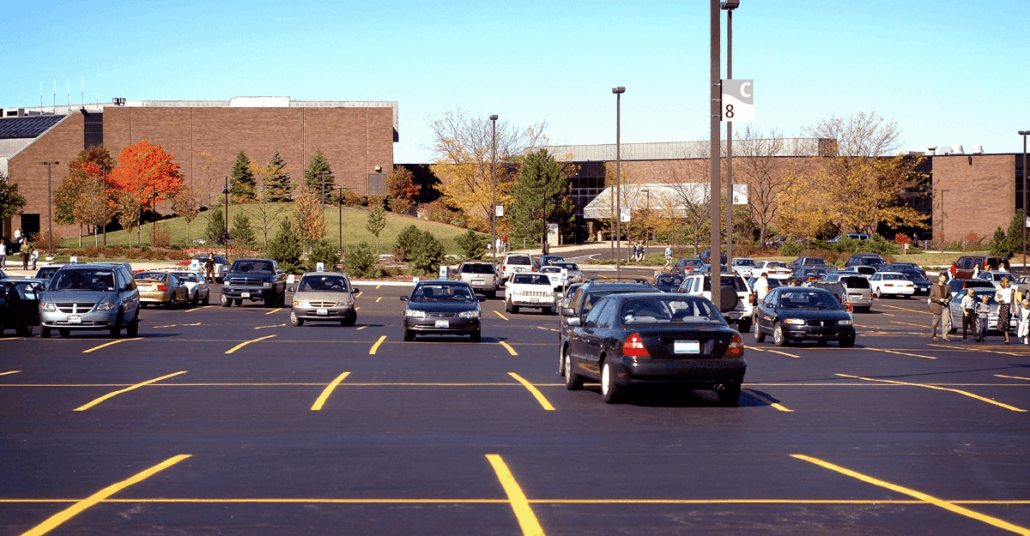
Parking lots are a known hotspot for injuries. The Orland Hills Walmart, given its size and location, sees an immense volume of both vehicle and foot traffic every single day. This constant flow creates a unique set of hazards that are different from those inside the store.
Property owners like Walmart are aware of these risks, which include:
- Heavy Traffic: Pedestrians are forced to interact with moving vehicles, all while shoppers may be distracted by looking for a parking spot or loading their cars.
- Weather Exposure: Unlike the aisles inside, the parking lot is exposed to every Illinois weather event. Rain, snow, and ice are major factors that the property owner must manage.
- Wear and Tear: The sheer volume of use leads to the rapid breakdown of the pavement, creating cracks, potholes, and uneven surfaces.
- Poor Lighting: Many parking lots are inadequately lit at night. This can hide a dangerous condition, like a pothole or a patch of ice, until it is too late.
The Legal Basis: Proving a Premises Liability Claim
When you are on Walmart’s property to shop, you are legally considered a “business invitee.” Under Illinois law, this means Walmart owes you the highest duty of care. They have an active responsibility to keep their premises in a reasonably safe condition.
However, just because you fell and were injured on their property does not automatically mean Walmart is liable. To have a valid claim, you must prove that Walmart was negligent. This means showing that they failed to act as a reasonable property owner would under similar circumstances.
What Are the Four Elements of a Premises Liability Claim?
To successfully hold Walmart responsible, your attorney must prove four specific legal elements:
- Duty: Walmart owed you a duty of care to maintain a reasonably safe parking lot. As a customer, this duty is clearly established.
- Breach: Walmart breached or violated that duty. This means they either created a dangerous condition and failed to fix it, or they knew or should have known about a hazard and did nothing about it.
- Causation: Walmart’s breach of duty was the direct and proximate cause of your fall and your injuries. You must show that but for the hazardous condition, you would not have been hurt.
- Damages: You suffered actual harm as a result. This includes physical injuries, medical bills, lost wages, and pain and suffering.
What Common Hazards Lead to Parking Lot Falls?
While a fall can happen in many ways, most claims against a property owner like Walmart stem from a few common, preventable hazards.
- Potholes and Cracked Pavement: Over time, pavement cracks, crumbles, and forms potholes. These create significant tripping hazards, especially when filled with water or hidden by shadows.
- Snow and Ice: This is a primary cause of winter injuries in Orland Hills. A failure to adequately salt or plow, or worse, plowing snow into piles that melt and refreeze on walkways, can create extreme danger.
- Inadequate Lighting: A burnt-out light fixture or a poorly designed lighting system that leaves large areas in darkness can make it impossible for a person to see an otherwise obvious hazard.
- Faded or Missing Paint: Worn-out paint on crosswalks, speed bumps, or wheel stops can cause confusion and create tripping hazards.
- Debris and Obstructions: Stray shopping carts, garbage, or merchandise pallets left in pedestrian pathways are all forms of negligence.
- Spilled Substances: Oil, antifreeze, or other liquids leaked from cars can create slick surfaces that are difficult to see on dark pavement.
- Damaged or Unsafe Cart Corrals: A broken or poorly maintained shopping cart return area can create an obstacle course for shoppers.
The Key Hurdle: Did Walmart Know About the Danger?
This is often the most contested part of a slip and fall claim. It is not enough to show a pothole existed. You must prove that Walmart had “notice” of the specific hazard that caused your fall.
Illinois law recognizes two types of notice:
- Actual Notice: This means a Walmart employee (like a manager or cart attendant) was directly told about the hazard or was the one who created it. For example, if a customer told a manager about a large pothole an hour before you fell, Walmart had actual notice.
- Constructive Notice: This is more common and more complex. Constructive notice means the hazard existed for such a long period that a reasonable property owner, performing regular inspections, should have discovered and fixed it. A small spill that just happened is not constructive notice. A massive pothole that has been growing for six months absolutely is.
Does Walmart Have a Special Duty to Remove Snow and Ice?
Given our harsh Illinois winters, this is a frequent question. Property owners are generally protected by the Illinois Snow and Ice Removal Act. This law states that a property owner is not liable for injuries caused by natural accumulations of snow or ice.
However, this protection is not absolute. A property owner can be held liable if their own attempts at snow removal were negligent and created an unnatural accumulation that caused the injury.
For example, if Walmart’s plowing contractor piles snow onto a median, and that snow melts during the day, runs across the main walkway, and then refreezes at night into a solid sheet of ice, that is an unnatural accumulation. Walmart could be held responsible for creating a new, more dangerous hazard.
What if Walmart Tries to Blame Me for the Fall?
Walmart and its insurance administrators will almost certainly try to shift the blame to you. They will argue that the hazard was “open and obvious” and you should have seen it, or that you were distracted by your phone or rushing.
This is a legal defense known as comparative negligence. In Illinois, this concept is defined by state law (735 ILCS 5/2-1116). This law establishes what is known as “modified comparative negligence.”
Here is how it works:
- You CAN recover damages if you are found to be 50% or less at fault for your own injury.
- You CANNOT recover any damages if you are found to be 51% or more at fault. This is the “51% bar.”
If you are found partially at fault (but less than 51%), your total compensation is simply reduced by your percentage of fault. For example, if your total damages are $100,000 but you are found 20% at fault for not paying attention, you would be able to recover $80,000. Walmart’s lawyers know this, and they will fight hard to push your share of the blame over the 51% mark, which would prevent you from recovering anything.
What Evidence Is Needed to Build a Strong Case?
Because the burden of proof is on you, gathering strong evidence is vital. A claim against a corporate giant cannot be won on your word alone. Key evidence includes:
- The Walmart Incident Report: You must report your fall to a store manager before you leave the property. Insist on filing an official incident report. This creates a formal record of the date, time, and location of the event.
- Photographs and Videos: Use your phone to take as many pictures and videos as possible, right after the fall. Get close-ups of the hazard (the pothole, the ice, the crack), and wide shots showing the surrounding area and the lack of warning signs or poor lighting.
- Witness Information: If anyone saw you fall or saw the dangerous condition, get their name and phone number. A neutral third-party witness is incredibly powerful.
- Medical Records: Seek medical attention immediately. Go to an emergency room at a local hospital like Palos Hospital or see your doctor. This creates a medical record that links your injuries directly to the time and date of the fall.
- Your Clothing and Shoes: Do not wash the clothes or shoes you were wearing. Put them in a bag. They can be evidence to show what you slipped on or to counter claims that your footwear was inappropriate.
The Most Important Evidence: Parking Lot Surveillance Video
Walmart has one of the most extensive video surveillance systems in the world. Their parking lots are covered by numerous cameras. This footage is, without question, the single most important piece of evidence in your case.
This video can prove:
- Exactly how your fall occurred.
- What the lighting conditions were.
- How long the hazard existed (proving constructive notice).
- If any Walmart employees walked past the hazard and ignored it.
This evidence is also extremely time-sensitive. Walmart does not save surveillance footage forever. It is often recorded after a set period, sometimes as short as a few weeks or even days. An attorney can send Walmart’s legal department a formal “spoliation letter.” This is a legal demand that they find, preserve, and not destroy any and all video evidence related to your fall. This action is one of the most important first steps in protecting your claim.
What Steps Should I Take Immediately After Falling at the Orland Hills Walmart?
The actions you take in the first hour after a fall can make or break your case.
- Report the Fall: Find a manager or security employee. Tell them exactly where you fell and what you fell on. Insist on filing an incident report and ask for a copy.
- Seek Medical Attention: Even if you feel you can “walk it off,” go to an urgent care clinic or an emergency room. Adrenaline can mask serious injuries like fractures or head trauma. This creates an essential medical record.
- Document the Scene: Before the hazard is cleaned up or repaired, take photos and videos with your phone. Get pictures of the pothole, the ice, the spill, or the poor lighting.
- Get Witness Information: Ask anyone who saw the fall for their name and phone number.
- Do Not Give a Recorded Statement: Walmart’s insurance company (or their third-party administrator, like CMI) will call you. They will sound friendly. Their goal is to get you on a recorded line to say something they can use against you, like “I guess I was just clumsy” or “I was in a hurry.” Politely decline to give a statement.
- Do Not Sign Anything: Do not accept a small cash offer or sign any paperwork from the store. You may be signing away your right to future compensation.
- Preserve Your Shoes: Put the shoes you were wearing in a safe place.
What Kind of Compensation Can Be Recovered?
A serious fall can result in broken hips, spinal injuries, or traumatic brain injuries. The financial and personal costs are immense. A successful premises liability claim allows you to demand compensation for all of your losses.
These damages are typically broken into two categories:
Economic Damages: These are your direct, calculable financial losses.
- All related medical bills (ambulance, ER, surgery, hospital stays).
- Future medical costs (physical therapy, follow-up appointments, medications).
- Lost wages from the time you missed work.
- Loss of future earning capacity if you are left with a permanent disability.
Non-Economic Damages: These are intangible losses related to the injury’s impact on your life.
- Pain and suffering.
- Emotional distress and anxiety.
- Disability or disfigurement.
- Loss of a normal life (inability to enjoy hobbies, play with your children, or perform daily tasks).
Navigating the Cook County Court System
The Walmart in Orland Hills is located in Cook County. This means any lawsuit related to your injury would be filed at the Fifth Municipal District courthouse in Bridgeview.
This is not a small detail. The Bridgeview courthouse has its own specific local rules, procedures, and judges. Walmart’s corporate lawyers and their local insurance defense attorneys are in this courthouse every single day. They know the system inside and out. Facing them alone, especially while recovering from an injury, puts you at a profound disadvantage.
Contact Our Orland Park Personal Injury Attorneys Today
An injury at a major retail store is not a simple accident claim; it is a legal fight against a corporation with nearly unlimited resources. If you or a loved one was injured in a slip and fall at the Orland Hills Walmart or any other property in the south suburbs, contact SFG Law Firm for a free, no-obligation consultation. Our attorneys are highly experienced in Illinois premises liability law and have a long history of handling complex cases in the Cook County courthouse in Bridgeview.
Let us review the facts of your case, explain your legal options, and show you how we can help. Call us today at 708-942-8400 or fill out our online contact form to get started.


Leave a Reply
Want to join the discussion?Feel free to contribute!