
Hit by a DoorDash Driver in Illinois: Can I Sue the Restaurant, DoorDash, or the Driver?
The seconds following a violent impact on the Kennedy Expressway often blur together. Blaring horns, shattered glass, and the immediate shock of physical pain leave motorists disoriented and vulnerable. Over the last decade, the massive explosion of the gig economy has dramatically transformed the landscape of Chicago traffic. Thousands of independent contractors utilizing applications like DoorDash, UberEats, and Grubhub constantly navigate the dense urban grid to satisfy consumer demands for rapid food delivery.
When the at-fault vehicle in a collision bears a glowing food delivery decal or the driver emerges clutching a smartphone displaying a route map, the situation becomes infinitely more complicated. Dealing with a distracted gig worker who prioritizes strict delivery metric times over basic public safety introduces a confusing maze of overlapping insurance policies and evasive corporate defense tactics. Food couriers routinely interact with their devices while driving, checking mapping software, texting customers, and frantically accepting new orders before they expire.
Who Is Legally Responsible When a DoorDash Driver Causes a Crash in Illinois?
Food delivery platforms intentionally construct their business models to distance the parent organization from the daily driving behavior of their couriers. By legally classifying their vast workforce as independent contractors rather than direct employees, these tech conglomerates attempt to shift the financial accountability entirely onto the shoulders of the individual driver.
When a food courier rear-ends your sedan near the heavily congested Circle Interchange, the initial legal claim typically targets the negligent driver directly. The primary at-fault party is undeniably the motorist who failed to maintain a safe following distance or ignored a red light while checking their route instructions.
The State of Illinois enforces a rigid deadline for pursuing these claims. Governed by 735 ILCS 5/13-202, injured victims have exactly two years from the date of the collision to file a personal injury lawsuit. Failing to file a formal civil complaint in the proper venue, such as the Circuit Court of Cook County, before this statutory window expires permanently bars your right to pursue any financial restitution.
Because establishing liability involves analyzing exactly what the driver was doing seconds before the physical impact, initiating an aggressive investigation immediately preserves the necessary digital footprints before they are conveniently deleted or overwritten by the corporate servers.
Gig economy drivers are everyday people using their personal vehicles to earn supplemental income. They do not undergo the rigorous safety training or background screening required of commercial truck drivers, yet they spend countless hours navigating dangerous and unfamiliar urban environments. When their predictable negligence results in catastrophic physical harm, victims must navigate complex insurance protocols just to secure the basic funds needed for their immediate medical recovery.
Will the Driver’s Personal Auto Insurance Cover My Injuries?
Every registered motorist in Illinois must carry minimum liability insurance to legally operate a vehicle on public roads. Following a severe crash, the at-fault driver’s personal auto policy is the initial target for recovering medical expenses and property damage. Injured motorists frequently assume this standard coverage will smoothly handle their mounting emergency room bills and vehicle repair costs. The reality of gig economy injury claims proves far more adversarial. Insurance carriers actively protect their massive profit margins by writing strict operational limitations into their consumer coverage contracts.
One of the most heavily enforced clauses is the standard business-use exclusion. This specific contractual language automatically voids the policy if the driver was utilizing their personal vehicle to generate commercial income at the exact moment of impact. Unless the delivery courier proactively purchased a specialized rideshare add-on or a commercial policy endorsement, which many fail to do because of the significant added monthly expense, their personal insurance carrier will swiftly deny your injury claim entirely once they discover the driver was logged into a food delivery application.
This initial denial from the personal insurance carrier serves as a necessary procedural hurdle. Corporate delivery applications generally structure their own massive insurance policies as contingent coverage. This means the corporate policy will not activate or acknowledge liability until the driver’s personal insurance has formally reviewed the crash details, investigated the driver’s app status, and issued a written denial of coverage. Forcing this administrative step requires persistent legal pressure to prevent intentional bureaucratic delays designed to starve out financially desperate victims.
When Does DoorDash’s $1 Million Commercial Liability Insurance Apply?
To fill the massive financial gap created by personal insurance denials, major delivery platforms maintain their own corporate liability policies. DoorDash carries a highly specific contingent liability policy designed to protect third parties injured by their couriers. Understanding the precise mechanics of this coverage requires breaking the driver’s daily shift into distinct operational phases.
During the ‘Delivery Available’ period, the driver has the smartphone application open and is actively waiting for a local restaurant request, but has not yet tapped the screen to accept a specific order. If a crash occurs during this idle waiting window, the corporate policy provides heavily limited coverage.
This tier typically offers fifty thousand dollars for bodily injury per person, one hundred thousand dollars per accident, and twenty-five thousand dollars for property damage. While helpful, these lower limits frequently fall painfully short of covering the staggering costs associated with emergency trauma care, multiple complex surgeries, and long-term physical rehabilitation.
The available coverage limits expand dramatically during the ‘Delivery Service’ period. This highly active phase initiates the exact second the driver taps their screen to accept a delivery request and terminates the moment the packaged food officially reaches the customer’s doorstep or the order is manually canceled in the system. During this busy window, the corporate policy provides up to one million dollars in third-party liability coverage. Accessing this higher policy limit is the primary objective when victims suffer severe spinal cord trauma, traumatic brain injuries, or require complex orthopedic care following a violent collision on our highways.
Can I Hold the Restaurant Liable for a Food Delivery Accident?
After suffering devastating physical injuries, victims naturally look to all involved business entities for financial restitution. Since the negligent driver was actively transporting hot food from a specific local establishment, many injured parties mistakenly assume the restaurant shares legal responsibility for the catastrophic crash. Under Illinois civil law, establishing this type of secondary liability requires proving a direct agency relationship exists between the retail business and the driver.
Local eateries simply partner with the delivery application to expand their customer base and increase their nightly sales volume. The restaurant staff cooks the meal, packages it in a branded paper bag, seals it for safety, and hands it over to the courier at the pickup counter. They do not hire the driver, they do not conduct the driver’s background check, they do not manage the driver’s weekly payroll, and they hold absolutely no legal authority to dictate which specific route the driver takes to the final drop-off location.
A restaurant would generally only face legal liability if they employed their own in-house delivery fleet. For example, if a traditional neighborhood pizza parlor directly hired a driver, provided them with a company-owned delivery van, and paid them an hourly wage, the restaurant could be held vicariously liable for a resulting crash. However, in the context of third-party gig economy platforms, the local restaurant remains entirely insulated from the driver’s negligence on the roadway.
What Evidence Proves the Delivery Driver Was on an Active Order?
Securing access to the million-dollar corporate policy hinges entirely on proving the driver was in the active delivery service phase at the exact moment of physical impact. The driver’s verbal statements at the accident scene carry very little legal weight. Delivery drivers frequently attempt to hide their app-based employment from responding police officers to protect their personal insurance coverage. This deception often makes the official police crash report incomplete or entirely inaccurate regarding their employment status at the time of the wreck.
Relying on objective forensic data rather than shifting narratives secures a much stronger legal position. Issuing formal spoliation letters to the parent corporation and the driver compels the immediate preservation of all digital evidence and prevents the intentional destruction of critical data files. Essential pieces of evidence gathered in a delivery accident claim include:
- In-app timestamp data showing the precise second an order was accepted, picked up, or canceled.
- GPS telematics tracking the vehicle’s speed, braking patterns, and route trajectory leading up to the collision.
- Digital communication logs between the driver, the restaurant, and the end customer.
- Cell phone records indicating whether the driver was physically interacting with the delivery application or texting while driving.
- Onboard dashcam footage, if the vehicle was equipped with a recording device.
Without this irrefutable digital footprint, victims are left relying on the at-fault driver’s honesty, which rarely yields a fair financial recovery. Securing this objective data forces the massive corporate insurance carriers to acknowledge their financial exposure and negotiate in good faith.
What Compensation Can Victims Recover After a Delivery Vehicle Collision?
Victims severely injured by a negligent delivery driver can seek economic damages for emergency medical care, physical rehabilitation, and lost income. Additionally, injured parties can actively pursue non-economic damages intended to address physical pain, emotional distress, and the permanent loss of normal life enjoyment.
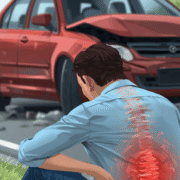
The violent physical force of a motor vehicle collision frequently results in catastrophic bodily trauma. Victims are suddenly thrust into a chaotic world of emergency rooms, surgical interventions, and grueling physical therapy sessions. The civil justice system provides a legal mechanism to shift this immense financial burden away from the innocent victim and back onto the negligent parties and their powerful insurance providers.
A comprehensive injury claim must thoroughly account for all past, present, and future losses. Economic damages reimburse victims for verifiable financial outlays. These exact dollar amounts cover immediate trauma care at regional facilities like Advocate Christ Medical Center or Rush University Medical Center. Common severe injuries resulting from these collisions often include:
- Traumatic brain injuries (TBI) requiring ongoing neurological monitoring.
- Spinal cord damage resulting in partial or complete paralysis.
- Compound bone fractures demanding immediate surgical intervention with hardware placement.
- Severe internal bleeding and organ damage.
- Whiplash and severe soft tissue tearing.
Economic recovery also includes ongoing physical therapy, necessary medical equipment, and the cost of outfitting a home to accommodate a new physical disability. Furthermore, victims are entitled to recover lost wages for the time missed from work and compensation for diminished earning capacity if their injuries permanently prevent them from returning to their chosen profession.
Non-economic damages address the profound human cost of a severe collision. While harder to quantify on a spreadsheet, these losses are often the most debilitating part of the long-term recovery process. Compensation in this specific category covers chronic physical pain, ongoing emotional distress, post-traumatic stress disorder, and the sheer loss of normal life enjoyment. When a severe spinal injury prevents a parent from lifting their child or participating in recreational hobbies, the law demands robust financial compensation for that devastating loss.
Contact a Chicago Delivery Accident Attorney at SFG Law Firm
Dealing with multiple insurance carriers, evasive delivery platforms, and uncooperative drivers is an overwhelming task for anyone recovering from severe physical trauma. The corporate entities involved in food delivery possess vast legal resources entirely dedicated to minimizing your financial recovery.
The knowledgeable attorneys at SFG Law Firm have built a strong track record of holding negligent drivers and massive tech companies accountable for the damage they cause on Illinois roadways. We thoroughly investigate every aspect of the collision, secure the necessary digital footprints, and aggressively negotiate for maximum compensation on your behalf.
If you or a loved one suffered injuries in a delivery vehicle crash, contact our office today to schedule your free, completely confidential consultation and learn exactly how we will fight to protect your future.
Frequently Asked Questions
What should I do immediately after being hit by a DoorDash driver?
First, secure your immediate physical safety and contact local law enforcement to generate an official police crash report. Seek immediate medical attention even if you feel completely fine, as adrenaline often masks severe internal injuries and concussions. Finally, document the physical scene with photographs and gather witness contact information before speaking to any corporate insurance adjusters.
Does it matter if the DoorDash driver did not have food in the car yet?
Yes, the driver’s exact application status heavily impacts the available insurance coverage. If the driver was logged into the application and merely waiting for a request, the corporate contingent policy provides significantly lower liability limits. The million-dollar commercial coverage only applies if the driver had officially accepted an order, regardless of whether the physical food was actively sitting in their vehicle at the time of the crash.
Who pays my medical bills while I wait for a final settlement?
During the pending legal litigation, your own personal health insurance or your auto policy’s medical payments coverage (MedPay) will typically handle the initial medical invoices. Once your legal team secures a final settlement or jury verdict against the at-fault driver or the delivery platform, those secured funds are used to reimburse your medical providers and cover any outstanding out-of-pocket expenses you incurred.
Can I sue if I was hit by a driver working for multiple delivery apps at once?
Many gig workers simultaneously operate multiple applications to maximize their daily income. If a collision occurs, your legal counsel will aggressively subpoena digital records from all suspected platforms to determine which application the driver was actively engaged with at the exact moment of physical impact. This specific data dictates which corporate insurance policy actively applies to your injury claim.
How long do I have to file a lawsuit against a delivery driver in Cook County?
Under Illinois civil law, you generally have exactly two years from the specific date of the motor vehicle accident to file a formal personal injury complaint. Failing to formally initiate legal proceedings within this strict statutory deadline permanently bars your right to seek financial recovery for your damages, regardless of the severity of your injuries or the clarity of the driver’s fault.


Leave a Reply
Want to join the discussion?Feel free to contribute!