
My Back Didn’t Hurt Until a Week After the Accident: Is It Too Late to File a Claim?
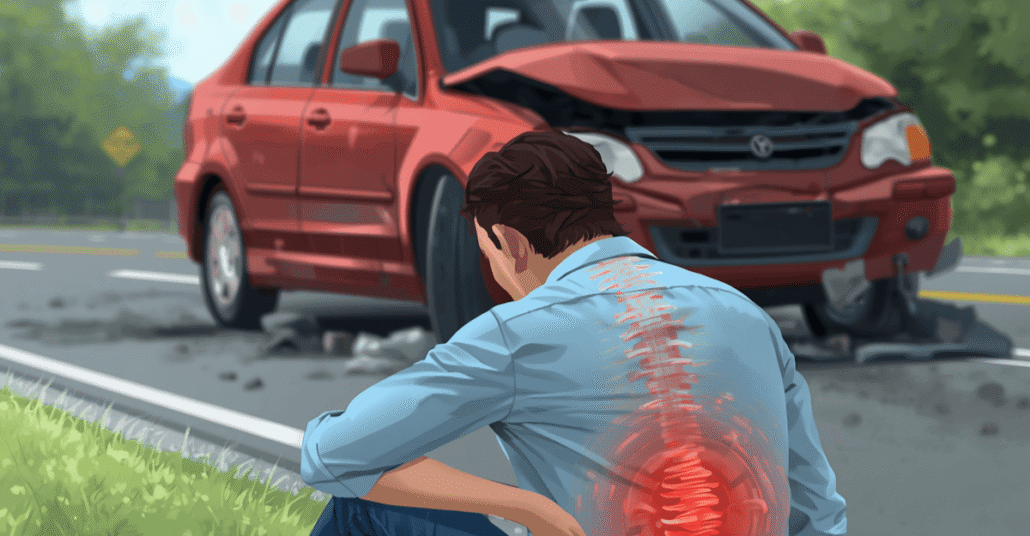
A collision on the Kennedy Expressway or DuSable Lake Shore Drive leaves drivers disoriented and flooded with physical stress. In the immediate aftermath, adrenaline surges through your bloodstream, dulling pain receptors and masking internal soft tissue trauma. You might walk away from the scene believing you escaped unharmed, even telling responding officers that you feel fine. Seven days later, however, the reality of the crash sets in as you wake up with deep throbbing or sharp shooting pain.
Experiencing delayed back symptoms is medically common and remains legally actionable under Illinois civil law. While insurance adjusters may exploit treatment delays to dispute medical causation, a gap between your collision and diagnosis does not eliminate your right to file a claim.
Is It Too Late to File a Car Accident Claim if Back Pain Starts a Week Later?
No, it is not too late to file a car accident claim in Illinois if back pain manifests a week after the collision. Under Illinois law, injured victims generally have two years from the date of the crash to initiate a personal injury lawsuit, regardless of delayed symptom onset. Many accident victims confuse internal insurance notification guidelines with state statutory filing deadlines. While insurance policies typically request prompt notification following an accident, your right to seek compensation through the civil court system is governed strictly by state law.
Under 735 ILCS 5/13-202, Illinois enforces a strict two-year statute of limitations for personal injury actions. This statutory clock begins running on the exact date the motor vehicle accident occurred, giving injured individuals twenty-four months to negotiate a settlement or file a complaint in the Circuit Court of Cook County.
The fact that your back pain took seven days to become severe enough to seek medical evaluation does not bar you from filing a claim within this two-year window. Illinois courts recognize that human physiology does not adhere to immediate rigid timelines following traumatic mechanical impact. Spinal disc injuries, ligament strain, and soft tissue inflammation frequently evolve gradually as localized swelling expands and presses against surrounding spinal nerves.
The primary hurdle in delayed back pain claims is not the statute of limitations, but establishing proximate cause. When a week elapses between the crash and your first medical treatment, the insurance company will argue that an intervening event such as lifting a heavy box or slipping on ice caused your condition. Overcoming this defense requires building a seamless bridge of medical evidence connecting the force of the collision directly to your delayed symptoms.
Why Does Back Pain Take Days or Weeks to Appear After a Collision?
Delayed back pain occurs because collision trauma triggers intense adrenaline and endorphin releases that temporarily suppress pain signals. Furthermore, soft tissue micro-tears, internal disc herniations, and localized inflammatory swelling expand slowly over time, compressing spinal nerves days or weeks after physical impact.
The human body possesses sophisticated defensive mechanisms designed to handle sudden physical trauma. During a collision on Interstate 290 or near the Circle Interchange, your brain floods your central nervous system with adrenaline and endorphins. This natural response elevates your heart rate and severely dulls pain perception, allowing you to walk, speak, and process the immediate surroundings without feeling underlying spinal damage.
As your body’s stress response subsides over twenty-four to seventy-two hours, internal damage begins to manifest. Blunt forces, rapid deceleration, and violent whipping movements cause microscopic tearing in muscles, tendons, and ligaments supporting the lumbar spine. As blood flow increases to repair these micro-tears, localized inflammation builds steadily within the spinal canal.
Traumatic collisions frequently cause distinct spinal conditions that exhibit a delayed onset of symptoms:
- Herniated and Bulging Lumbar Discs: Violent rotational forces can rupture the tough outer ring of an intervertebral disc. The gel-like inner core gradually pushes outward over several days, impinging on surrounding nerve roots and causing sharp radiating lower back and leg pain.
- Lumbar Strain and Ligamentous Sprain: Severe stretching of muscle fibers and spinal ligaments causes inflammation that peaks three to seven days post-accident, resulting in debilitating stiffness and restricted spinal mobility.
- Facet Joint Syndrome: The small joints connecting your vertebrae can sustain severe blunt trauma, leading to delayed localized inflammation, burning sensations, and intense stiffness when twisting or bending.
- Lumbar Radiculopathy: Inflammation surrounding compressed spinal nerve roots often develops gradually, triggering shooting pain, tingling, or numbness traveling down through the buttocks and legs weeks after impact.
- Aggravation of Pre-Existing Conditions: Violent mechanical stress can destabilize pre-existing, asymptomatic spinal wear, turning a quiescent condition into a source of constant chronic pain.
Attending physicians at major Chicago medical centers like Rush University Medical Center frequently observe patients presenting with severe secondary back pain several days following motor vehicle collisions. Recognizing these biological mechanisms allows your attorney to explain to insurance adjusters why your pain was not immediately apparent at the scene.
How Do Insurance Companies Attempt to Reject Delayed Injury Claims in Illinois?
Insurance companies aggressively contest delayed injury claims by asserting a gap in medical treatment. Adjusters argue that failing to seek immediate emergency care proves the injury was minor, non-existent, or caused by an unrelated event occurring after the motor vehicle collision.
Insurance claims adjusters are trained to minimize payout liabilities for corporate carriers. When reviewing a claim where the victim waited a week before seeking medical care, adjusters flag the file as a target for denial or severe valuation reduction. They rely on software algorithms that heavily penalize any gap in treatment between the crash date and the initial medical evaluation.
Understanding these defensive strategies allows you to take proactive steps to safeguard your right to recovery. Corporate adjusters in Chicago routinely utilize specific arguments to invalidate delayed back injury claims:
- The Gap in Treatment Defense: Adjusters claim that if you were truly injured, you would have visited an emergency room immediately. They treat any delay as proof that the injury is fabricated or exaggerated.
- Intervening Cause Allegations: Insurance companies argue that during the week between the accident and your doctor visit, an unrelated incident—such as lifting groceries or working a physical job—caused your back pain.
- Pre-Existing Degenerative Disease Claims: Adjusters obtain past medical records to claim your back pain is entirely attributable to age-related wear, prior work injuries, or natural disc decay, ignoring how the crash aggravated the condition.
- Misinterpreting Early Recorded Statements: Defense representatives use casual comments recorded during early phone conversations such as “I felt fine at the scene” to argue that you admitted under oath that you suffered zero harm.
To defeat these tactics, you must counter corporate assumptions with objective medical facts. Failing to seek emergency transportation does not mean you were uninjured; it simply means your symptoms required time to manifest. Overcoming insurance denials requires meticulously documenting your medical timeline and retaining legal counsel capable of refuting adjuster arguments with specialized medical testimony.
What Steps Should You Take Immediately if Your Back Starts Hurting Days After a Crash?
If back pain develops days after a crash, immediately obtain a comprehensive medical evaluation, inform the doctor that your symptoms followed a vehicle collision, decline recorded statements with insurance adjusters, and consult an experienced Chicago personal injury attorney to preserve vital evidence.
Taking swift action the moment back discomfort or radiating numbness begins is critical to protecting both your physical health and your legal claim. The decisions you make during the first few days after symptoms appear will form the foundation of your personal injury case.
If you begin experiencing delayed back pain following an auto accident in Cook County, follow these essential protocols immediately:
- Seek Immediate Professional Medical Attention: Schedule an evaluation with an orthopedic physician or visit an urgent care facility immediately. Do not wait for the pain to become unbearable, as further delay strengthens the insurance company’s gap in treatment defense.
- Provide a Complete and Accurate Accident History: Clearly inform the treating physician, nurses, and intake staff that your back symptoms began following a motor vehicle accident on a specific date. Ensure the medical provider explicitly notes this causation link in your official chart history.
- Request Advanced Diagnostic Imaging: Primary care clinics often order standard x-rays, which only show bone fractures. Request a referral for a high-resolution Magnetic Resonance Imaging (MRI) scan or CT scan to evaluate soft tissues and intervertebral discs.
- Refuse Recorded Insurance Statements: Insurance adjusters will call asking for a recorded interview. Politely decline to provide any recorded statements regarding your physical health or injury timeline until you have spoken with legal counsel.
- Maintain a Detailed Symptom Journal: Maintain a daily log documenting your pain levels, physical limitations, missed work shifts, sleep disruptions, and difficulty performing routine tasks. Detailed personal notes provide compelling evidence of pain and suffering.
Seeking care at recognized regional facilities like Advocate Christ Medical Center or Chicago-area spine clinics ensures that your injuries are evaluated by qualified professionals whose clinical findings carry significant weight during settlement negotiations.
How Can Medical Records Prove Your Delayed Back Pain Was Caused by the Accident?
Medical records prove causation by documenting a direct chronological link between collision forces and your structural spinal trauma. Objective diagnostic tests, such as MRIs and EMG nerve studies, demonstrate internal soft tissue tears that correspond precisely with vehicular impact forces. In personal injury litigation, subjective statements regarding pain are insufficient on their own to compel an insurance carrier to pay significant compensation. You must present objective medical evidence that demonstrates physiological damage directly resulting from the crash. Objective evidence consists of verifiable diagnostic data that cannot be feigned or exaggerated.
Radiological imaging plays a central role in proving delayed spinal trauma. While initial X-rays taken at an emergency room may appear normal because they only capture dense bony structures, an MRI scan utilizes magnetic fields to generate detailed cross-sectional images of soft tissue. An MRI can reveal acute annular tears, fluid accumulation around intervertebral discs, nerve root compression, and localized inflammation.
Medical specialists establish causation by analyzing crash biomechanics alongside your diagnostic results. Comprehensive medical research published by institutions such as the National Institutes of Health confirms that mechanical acceleration-deceleration forces in low-to-moderate speed collisions generate significant stress on the lumbar spine. Treating orthopedic surgeons and neurosurgeons utilize these clinical studies to testify that acute disc herniations and nerve impingement were directly triggered by physical forces exerted during the collision.
Furthermore, electromyography (EMG) and nerve conduction velocity (NCV) testing provide definitive quantitative data regarding nerve damage. By measuring electrical activity in your muscles and nerve pathways, an EMG confirms whether delayed lower back pain is associated with active nerve root compression stemming from the accident site.
What Types of Compensation Can You Recover for a Delayed Back Injury?
Victims recovering from delayed back injuries in Illinois can recover economic damages for medical costs, physical therapy, and lost wages, as well as non-economic damages for pain and suffering, physical impairment, and diminished quality of life.
A severe spinal injury disrupts every aspect of your personal and professional life. Under Illinois civil law, personal injury compensation is designed to restore an injured victim, as nearly as possible, to the financial and physical position they would have occupied had the collision not occurred. Damages are broadly categorized into economic and non-economic losses.
Economic damages cover all quantifiable, out-of-pocket financial losses resulting from your collision injuries, including:
- Past and Future Medical Expenses: Complete reimbursement for emergency room visits, physician consultations, physical therapy sessions, epidural steroid injections, prescription medications, and necessary spinal surgery.
- Lost Wages and Income: Compensation for income lost while recovering from back pain, missing shifts for medical appointments, or taking unpaid medical leave under the Family and Medical Leave Act (FMLA).
- Diminished Future Earning Capacity: If permanent spinal damage prevents you from returning to your previous career field or limits the physical tasks you can perform, you can seek damages for long-term reduction in earning potential.
Non-economic damages address the profound physical and emotional impact of your spinal trauma, including:
- Physical Pain and Suffering: Monetary recovery for ongoing physical discomfort, sharp nerve pain, localized soreness, and the emotional distress associated with coping with a sudden physical limitation.
- Physical Impairment and Disability: Compensation for permanent physical limitations, partial paralysis, loss of spinal flexibility, or permanent nerve damage confirmed by clinical diagnostic testing.
- Loss of Normal Life Enjoyment: Damages awarded for the inability to engage in recreational sports, play with your children, perform routine household chores, or participate in hobbies you enjoyed prior to the crash.
How SFG Law Firm Helps Victims Overcome Insurance Denials in Delayed Injury Cases
Overcoming an insurance company’s gap in treatment defense requires a legal team that understands how to unravel corporate stalling tactics, gather compelling medical evidence, and demonstrate clear proximate cause. At SFG Law Firm, our knowledgeable Chicago personal injury attorneys have successfully represented motor vehicle accident victims throughout Cook County, securing full financial recovery for complex, delayed-onset spinal injuries.
We handle every step of your legal claim from obtaining diagnostic MRI scans and consulting with leading orthopedic specialists to negotiating aggressively with insurance carriers and litigating in the Circuit Court of Cook County. Our priority is allowing you to focus entirely on your physical recovery while we fight to protect your legal rights.
Contact our Chicago legal team today to schedule your free, confidential consultation.
Frequently Asked Questions About Delayed Back Injury Claims
Will my claim be denied if I told the police at the scene I wasn’t injured?
Stating at the accident scene that you feel fine does not automatically disqualify your claim. Police officers record immediate surface impressions, but adrenaline routinely conceals underlying soft tissue tears and intervertebral disc damage. Objective medical records and diagnostic imaging carry significantly more legal weight in court than an initial casual statement made while in shock.
Should I accept a quick settlement offer from the insurance company before seeing a doctor?
Accepting an early settlement offer from an insurance adjuster is a critical mistake. Signing a settlement release permanently extinguishes your legal right to demand additional compensation if your back pain worsens into a chronic herniated disc requiring surgery. Always undergo a full medical evaluation and consult an attorney before agreeing to any settlement offer.
How long after a Chicago car accident should I get an MRI for back pain?
You should seek a professional medical evaluation as soon as back pain or tingling manifests, ideally within a few days of the collision. If conservative care such as rest or physical therapy does not alleviate pain, your physician will order a lumbar spine MRI. Obtaining diagnostic imaging within two to four weeks of symptom onset provides clear objective evidence linking the injury to the crash date.
Can I file a claim if I had a pre-existing back condition before the crash?
Yes, you can file a claim under the eggshell plaintiff doctrine recognized by Illinois courts. A negligent driver is legally responsible for aggravating, worsening, or re-activating a pre-existing, asymptomatic back condition. Your attorney can utilize comparative medical imaging to demonstrate how the crash exacerbated your prior spinal health.
What if the car accident involved a CTA bus or City of Chicago vehicle?
If your collision involved a CTA bus, municipal vehicle, or government property, shortened legal deadlines apply. Under 745 ILCS 10/8-101, you have only one year from the exact date of the accident to file a formal lawsuit in Circuit Court. Prompt legal action is necessary to preserve surveillance video and satisfy municipal notice requirements.







Leave a Reply
Want to join the discussion?Feel free to contribute!